orx-mesh-generators
3D-mesh generating functions and DSL.
Simple meshes
// To create simple meshes
val sphere = sphereMesh(32, 32, 4.0)
val box = boxMesh(2.0, 4.0, 2.0)
val cylinder = cylinderMesh(radius = 0.5, length = 1.0, center = true)
val dodecahedron = dodecahedronMesh(0.5)
val plane = planeMesh(Vector3.ZERO, Vector3.UNIT_X, Vector3.UNIT_Y)
val disk = capMesh(sides = 15, radius = 0.5)
val tube = revolveMesh(sides = 15, length = 1.0)

// To draw the generated meshes
drawer.vertexBuffer(dodecahedron, DrawPrimitive.TRIANGLES)
Complex triangular mesh generation
orx-mesh-generators comes with buildTriangleMesh, which
implements a DSL
to construct 3D shapes.
To create shapes we can call methods like box(), sphere(),
cylinder(), dodecahedron(), plane(), revolve(),
taperedCylinder(), hemisphere() and cap().
// Create a rotated box
val mesh = buildTriangleMesh {
    rotate(Vector3.UNIT_Z, 45.0)
    box()
}
We can also use methods like translate() and rotate() to create
more complex compositions. The color property sets the color of
the next mesh.
// Create a ring of boxes of various colors
val mesh = buildTriangleMesh {
    repeat(12) {
        // Take a small step
        translate(2.0, 0.0, 0.0)
        // Turn 30 degrees
        rotate(Vector3.UNIT_Y, 30.0)
        // Set a color
        color = rgb(it / 11.0, 1.0, 1.0 - it / 11.0)
        // Add a colored box
        box(1.0, 1.0, 1.0)
    }
}
isolated { ... } can be used to encapsulate transformations and
avoid them accumulating to unpredictable values.
val mesh = buildTriangleMesh {
    repeat(10) { x ->
        repeat(10) { y ->
            isolated {
                translate(x * 1.0, y * 1.0, 0.0)
                sphere(8, 8, 0.1)
            }
        }
    }
}
Other available methods are:
grid(): creates a tri-dimensional grid of meshes.extrudeShape(): gives depth to 2DShape.twist(): post-processing effect to twist a mesh around an axis.extrudeContourSteps(): uses Parallel Transport Frames to extrude a contour along a 3D path.
The demo folder contains examples using these methods.
Check out the source code to learn about function arguments.
Demos
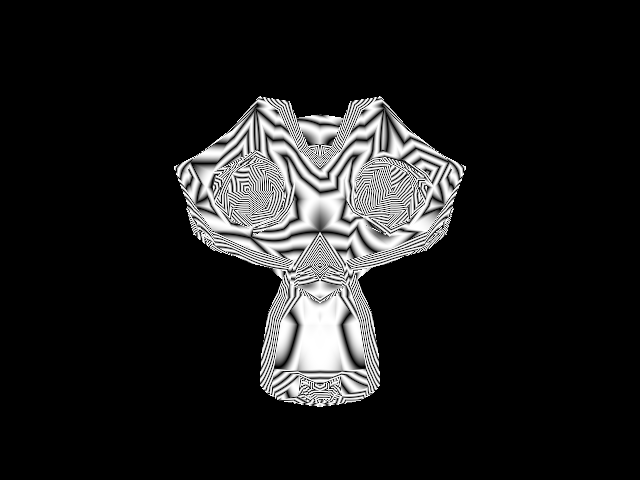
decal/DemoDecal01
Demonstrate decal generator as an object slicer
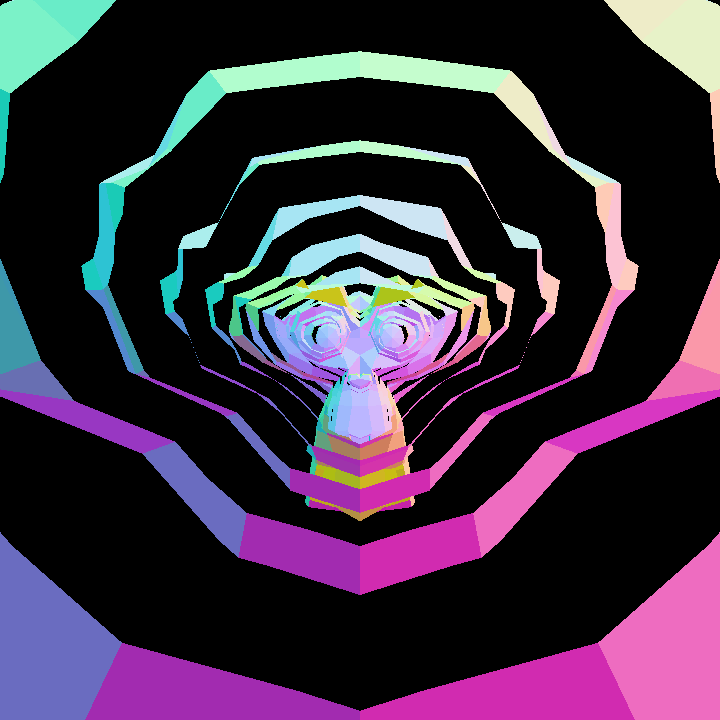
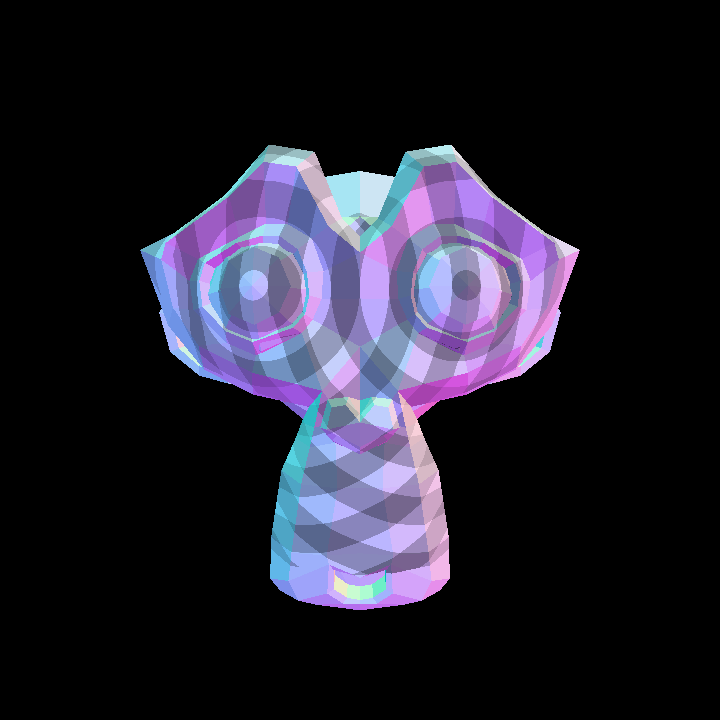
decal/DemoDecal02
Demonstrate decal generation and rendering
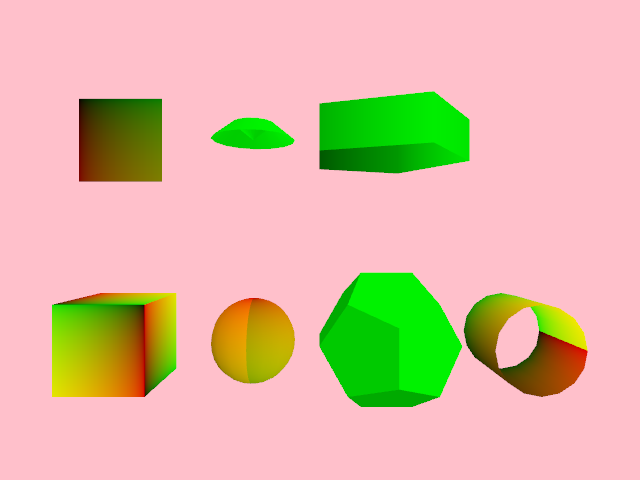
DemoAll
Demonstrates how to create various types of 3D meshes: box, sphere, dodecahedron, cylinder, plane, cap and resolve.
Two textures are used: one generative with gradients, and the second one is an image loaded from disk. The horizontal mouse position is used to select which of the two textures to use.
The meshes are positioned in space using a 2D mesh, and displayed rotating on the X and Y axes at different speeds.
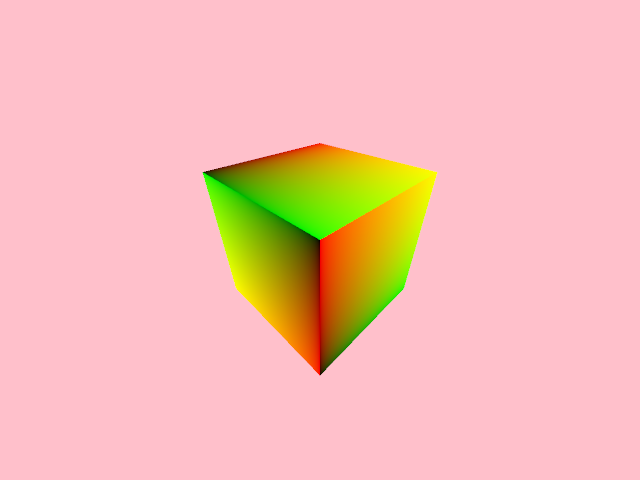
DemoBox
Demonstrates how to create a 3D mesh box by specifying its width, height and depth.
The box is a VertexBuffer and contains texture coordinates which can be
used to apply a texture to its faces.
After creating the box, the program creates a texture with a gradient. In it, the red component increases along the x-axis and the green component along the y-axis.
The scene is rendered with an interactive Orbital 3D camera.
A shade style is used to apply the texture to the box.
DemoComplex01
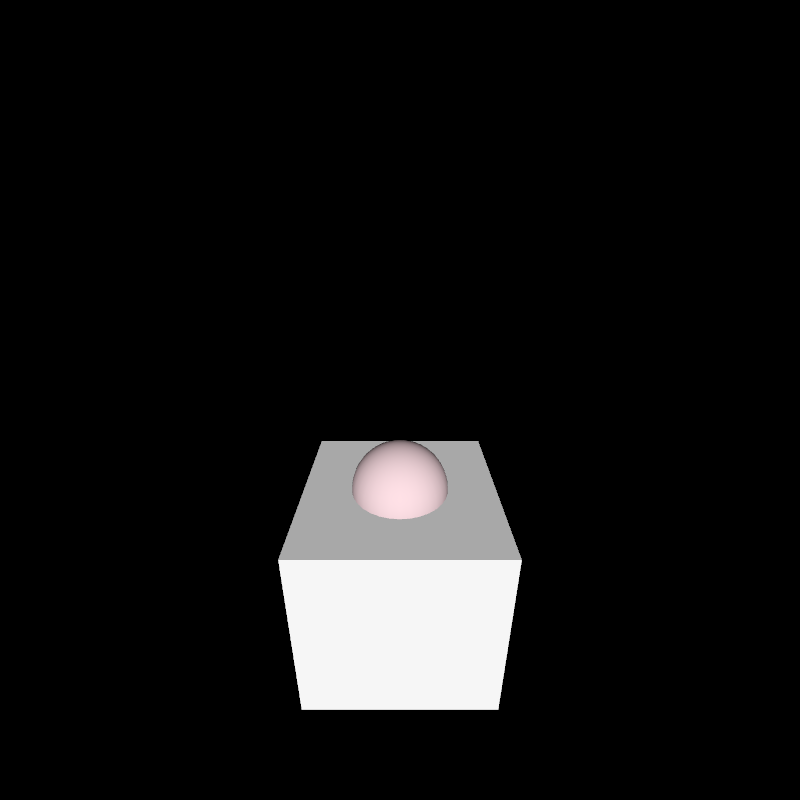
Demonstrates how to use buildTriangleMesh to construct composite 3D meshes.
A DSL allows specifying the color and transformations of each mesh, in this case, of a sphere and a box.
An interactive 3D Orbital camera is defined, specifying the location of its eye and
lookAt properties.
A minimal shade style is used to simulate a uni-directional light pointing along the view Z axis.
DemoComplex02
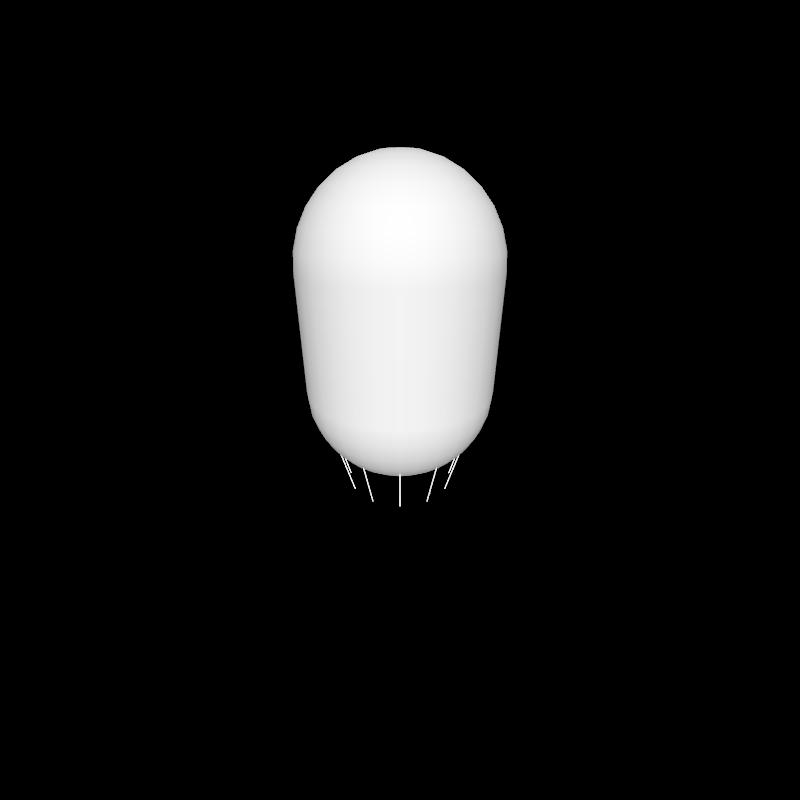
Demonstrates the creation of a 3D mesh composed of two hemispheres, a cylinder and 12 legs.
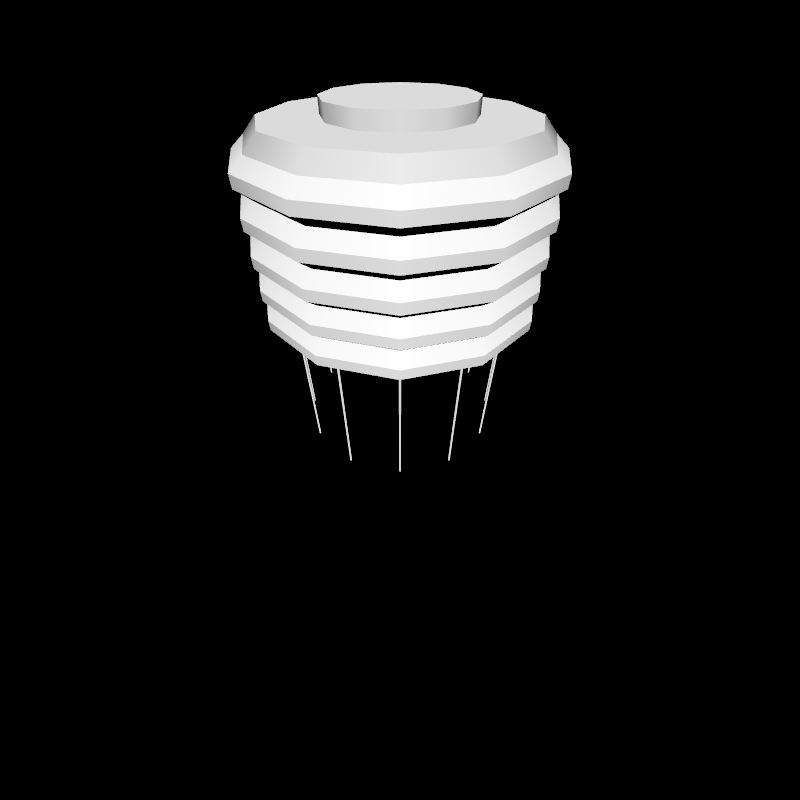
DemoComplex03
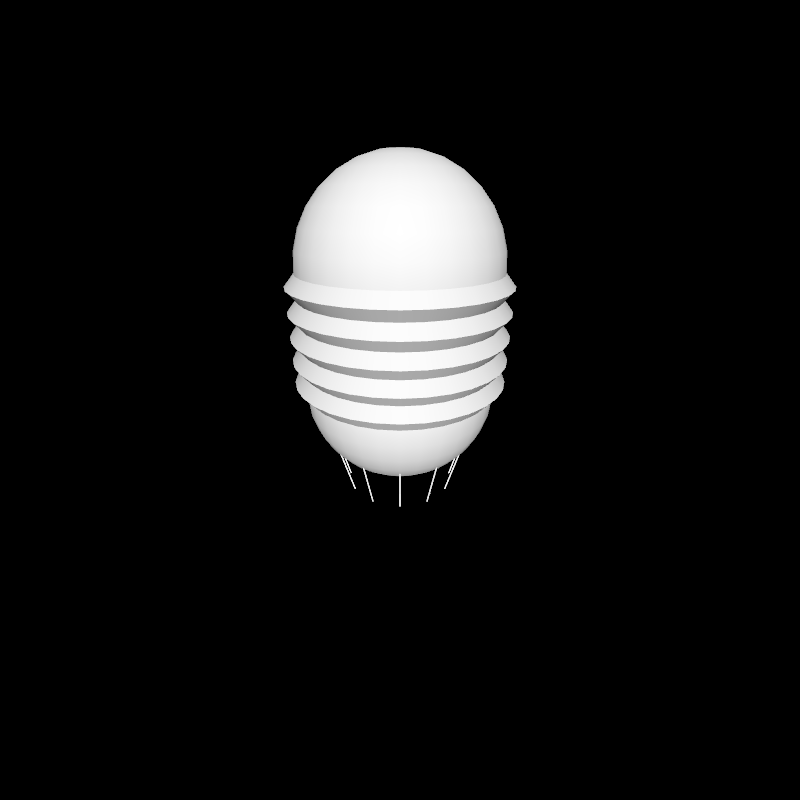
Demonstrates the creation of a 3D mesh composed of two hemispheres, a cylinder and 12 legs. Additionally, the body of the shape features 5 ridges on the sides of the cylinder.
The code reveals DSL keywords under buildTriangleMesh
affecting transformation matrices, for instance isolated, translate and rotate,
and mesh generating keywords like
hemisphere, taperedCylinder and cylinder.
DemoComplex04
Demonstrates the use of buildTriangleMesh to create
a composite 3D mesh and introduces a new mesh generating keyword:
cap.
DemoComplex05
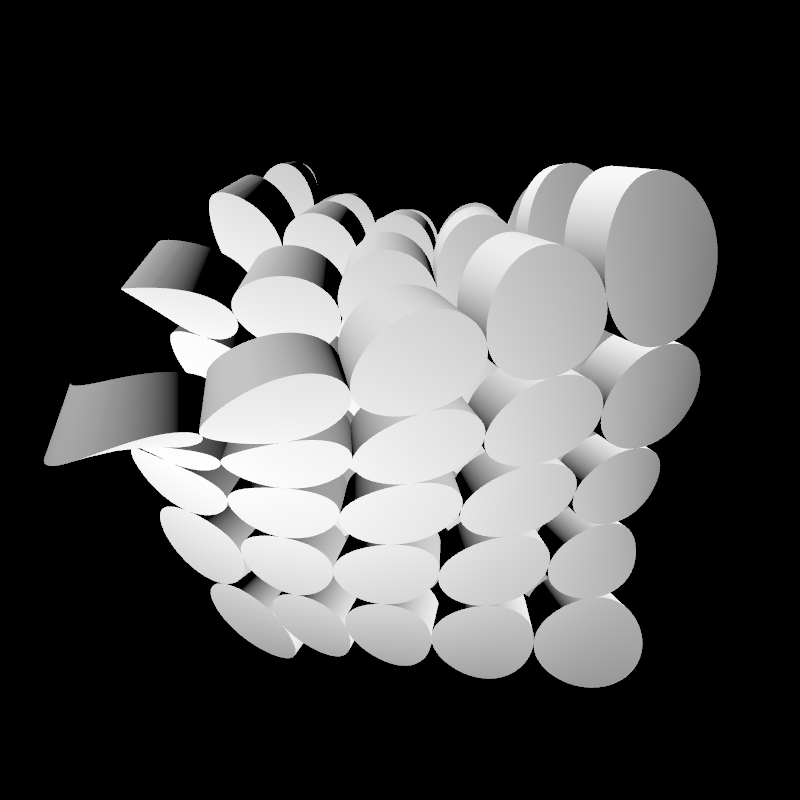
Demonstrates how to create a 3D grid of extruded shapes (short cylinders), then applies three 3D twists to the composition to deform it.
DemoComplex06
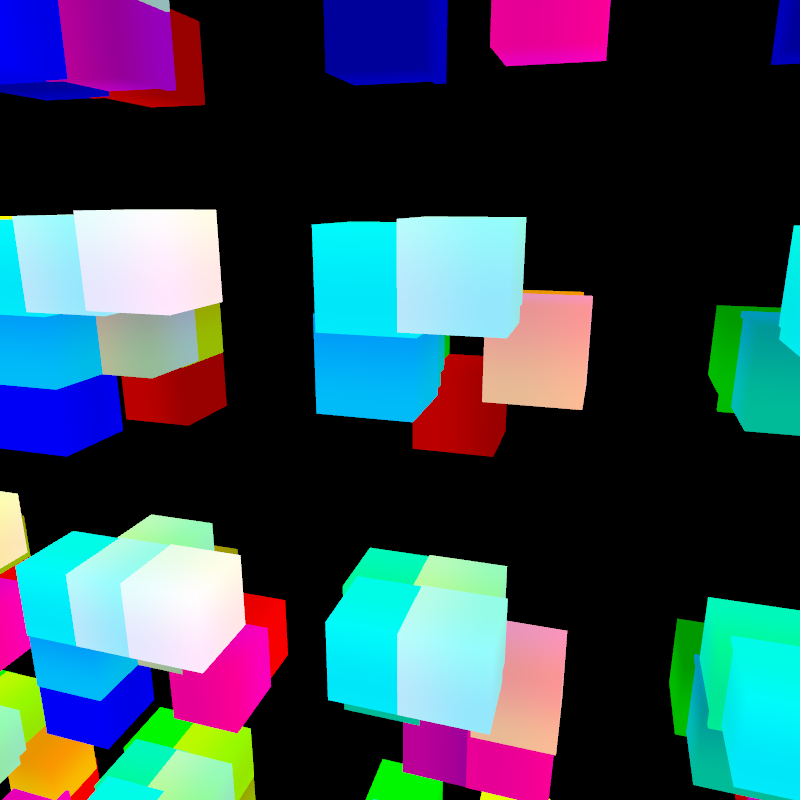
Generates a grid of grids of 3D boxes using buildTriangleMesh and
renders them using an interactive orbital camera.
The cubes ar colorized using a shade style that sets colors based on vertex positions in space, converting XYZ coordinates into RGB colors.
DemoExtrude01
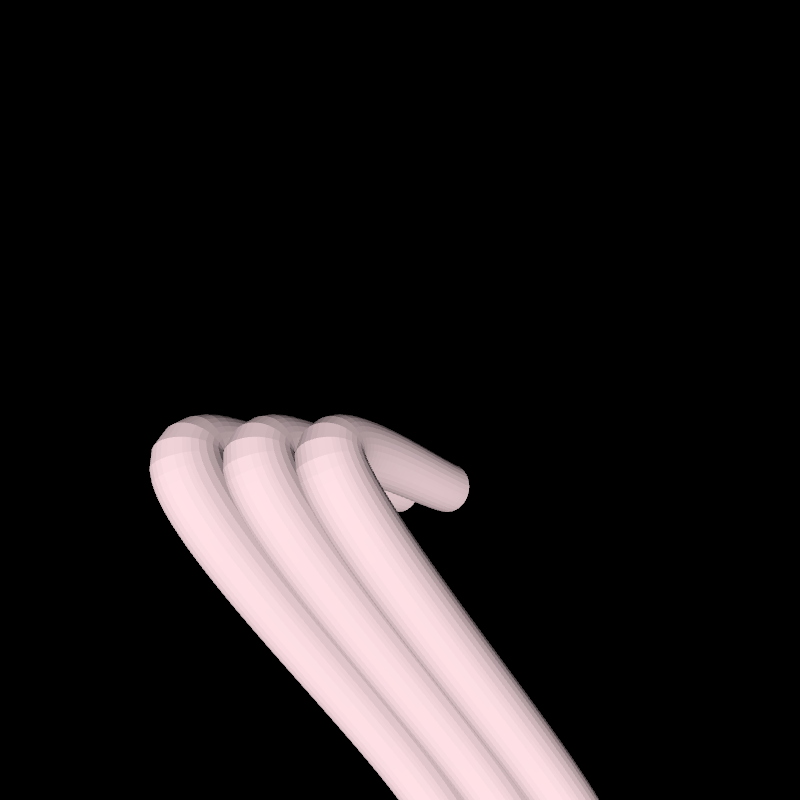
Demonstrates how to create curved tubes by extruding a circular contour along a 3D catmullRom-path using [buildTriangleMesh] and [extrudeContourSteps].
The result is a [org.openrndr.draw.VertexBuffer] which can be rendered with
drawer.vertexBuffer().
An [Orbital] camera makes the scene interactive. A minimal shadeStyle is used
to simulate a directional light.
DemoExtrude02
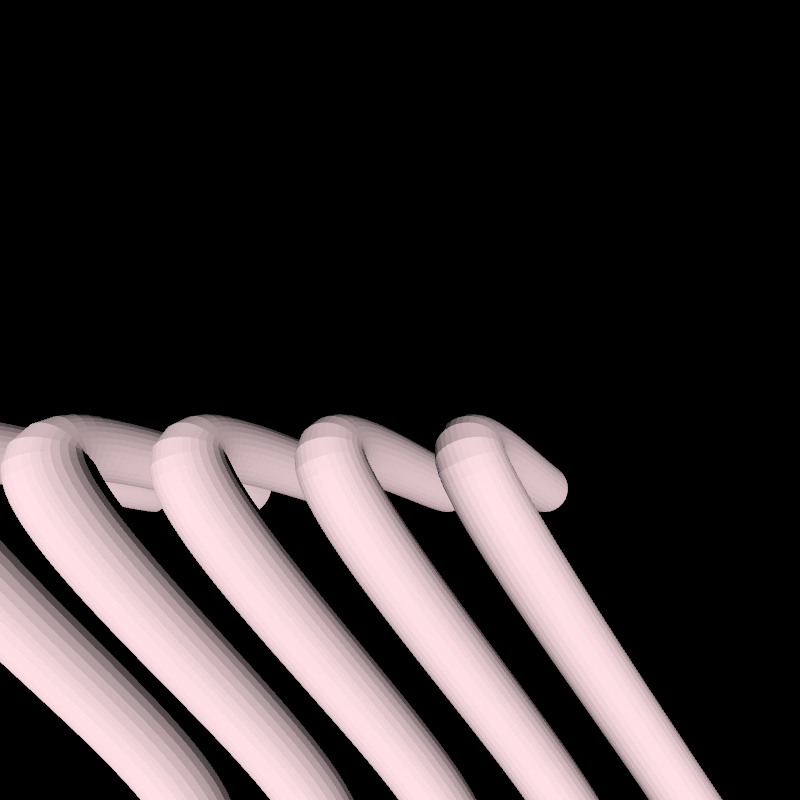
Demonstrates how to create hollow tubes with thickness by extruding a circular [Shape] built out of two concentric circular contours. Note that the inner contour is reversed.
The result is a [org.openrndr.draw.VertexBuffer] which can be rendered with
drawer.vertexBuffer().
An [Orbital] camera makes the scene interactive. A minimal shadeStyle is used
to simulate a directional light.
DemoExtrude03
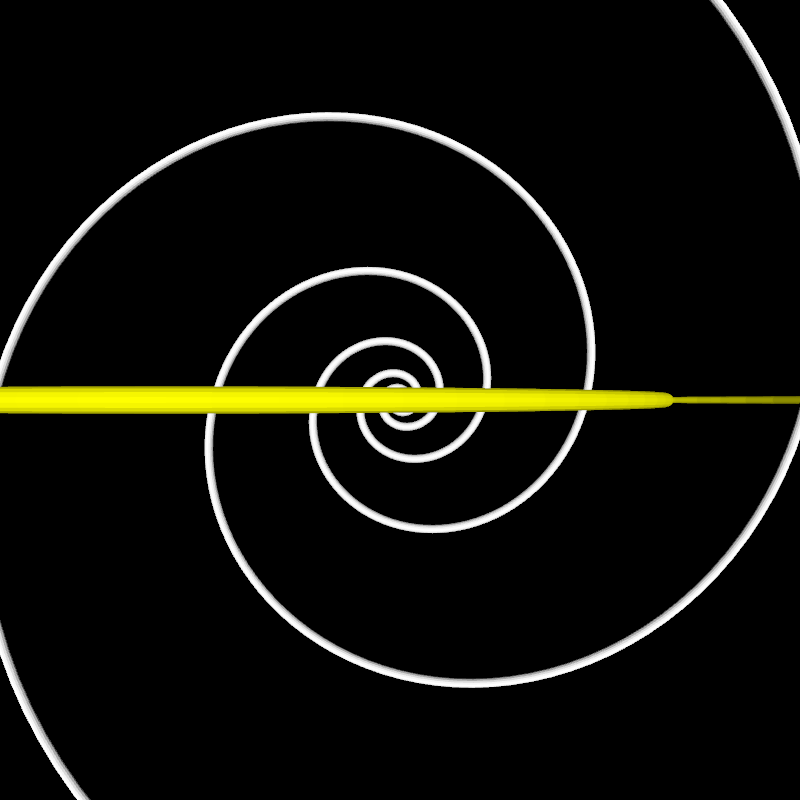
Demonstration creating two intersecting spirals using [buildTriangleMesh] and [extrudeContourAdaptive]. This approach generates as many vertices as needed based on the provided tolerance.
The result is a [org.openrndr.draw.VertexBuffer] which can be rendered with
drawer.vertexBuffer().
The [Orbital] camera slowly rotates on its own while
still being interactive.
A minimal shadeStyle is used to simulate a directional light.
DemoExtrude04
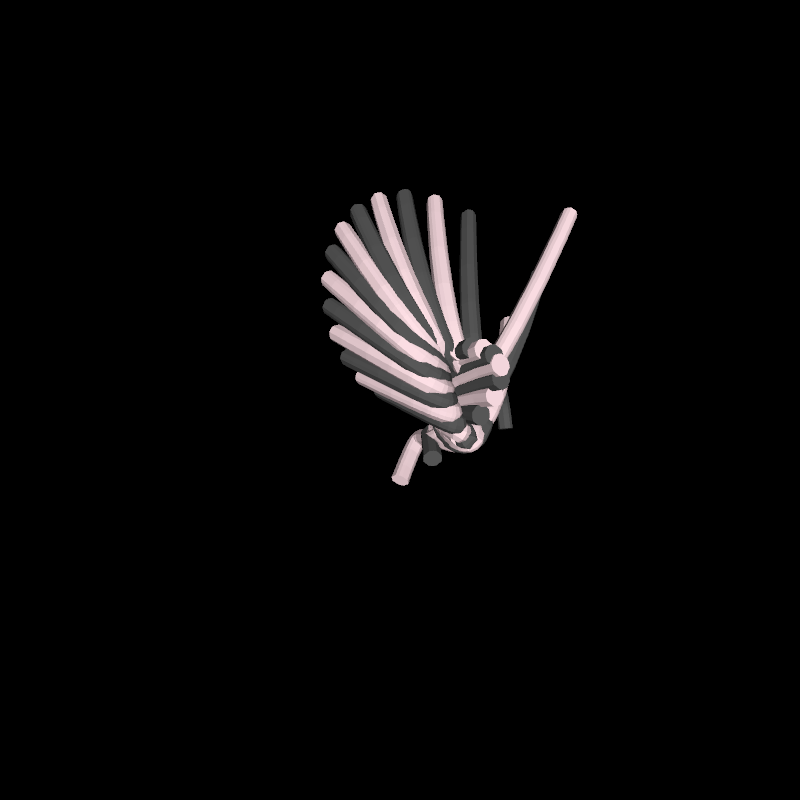
A series of 3D Bézier tubes grown on an animated, morphing, invisible Bézier surface.
As if we were drawing a series of parallel lines on a piece of paper, then twisting and bending that paper over time.
Demonstrates how to destroy a [org.openrndr.draw.VertexBuffer] on every animation frame to avoid filling out the memory.
DemoExtrude05
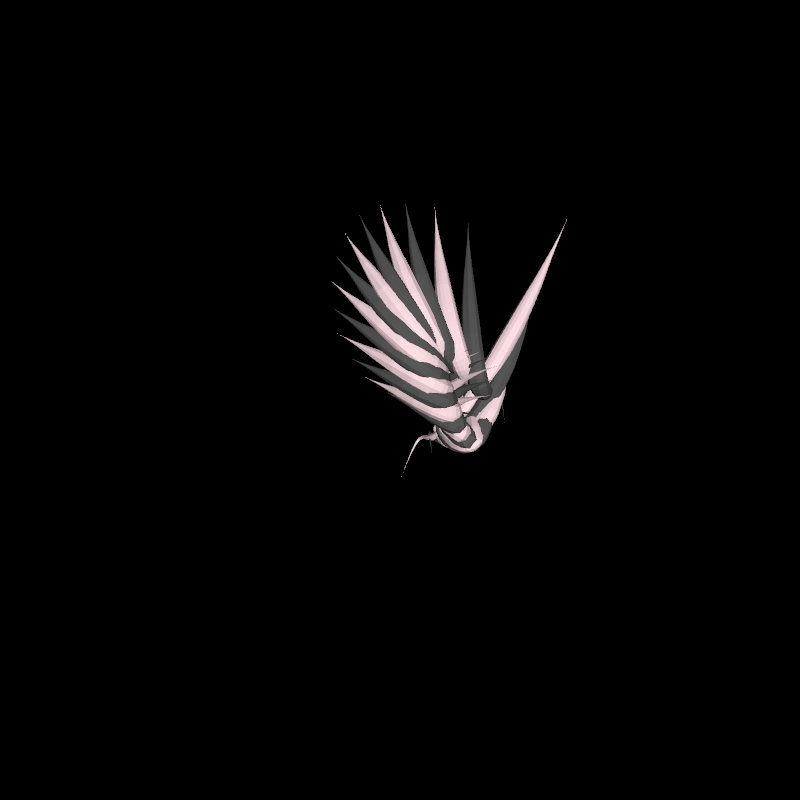
A series of 3D Bézier tubes grown on an animated, morphing, invisible Bézier surface.
This variation uses [extrudeContourStepsScaled] to apply a varying scaling to the cross-sections, making the ends shrink to a hairline.
Calls destroy on the [org.openrndr.draw.VertexBuffer]
on every animation frame to free the used memory.
DemoExtrude06
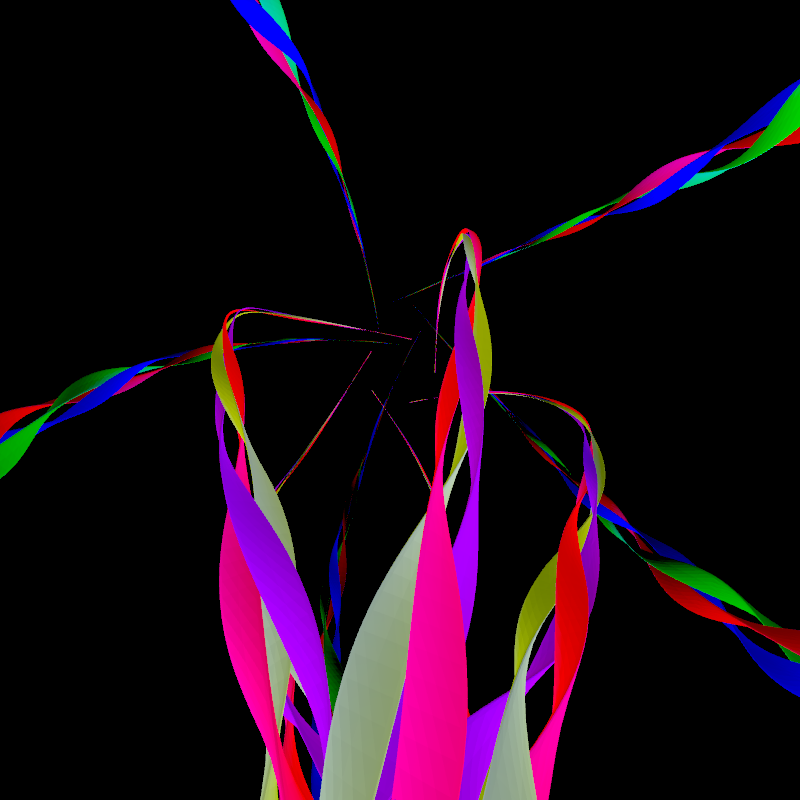
Demo [extrudeContourStepsMorphed] which allows creating a mesh with an animated, morphing cross-section based on the t value along a [Path3D]. In other words, a tube in which the cross-section does not need to be constant, but can be scaled, rotated and displaced along its curved axis.
Loads a texture and applies a repeat-wrapping mode to it. The texture can be enabled in the GLSL code inside the shadeStyle.
The mesh is rendered 5 times rotated around axis Z for a radial-symmetry effect.
tangents/DemoTangents01
Tangent and bitangent vectors are used in shader programs for tangent space normal mapping / lighting and certain forms of displacement mapping.
This demo shows:
- how to create a triangulated
MeshData. - how to estimate the tangents of this MeshData.
- How to use the tangent and bitangent attributes in GLSL code.