orx-triangulation
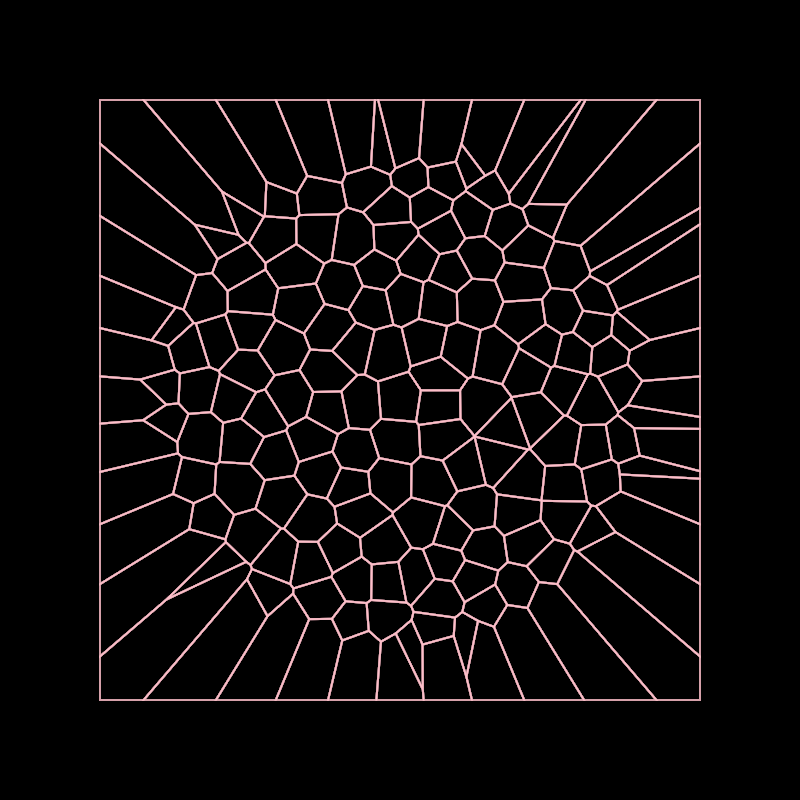
An extension for triangulating a set of points using the Delaunay triangulation method. From that triangulation we can also derive a Voronoi diagram.
The functionality comes from a Javascript port of the following libraries:
- delaunator (external)
- d3-delaunay (the port is included in this package)
Usage
Delaunay
The entry point is the Delaunay class.
    val points: List<Vector2>
    val delaunay = Delaunay.from(points)

    // or
    val flatPoints: DoubleArray // (x0, y0, x1, x1, x2, y2)
    val delaunay = Delaunay(flatPoints)
This is how you retrieve the triangulation results:
val triangles: List<Triangle> = delaunay.triangles()
val halfedges: List<ShapeContour> = delaunay.halfedges()
val hull: ShapeContour = delaunay.hull()

// Updates the triangulation after the points have been modified in-place.
delaunay.update()
Voronoi
The bounds specifices where the Voronoi diagram will be clipped.
val bounds: Rectangle

val delaunay = Delaunay.from(points)
val voronoi = delaunay.voronoi(bounds)
// or
val voronoi = Voronoi(Delaunay.from(points), bounds)
See To Infinity and Back Again for an interactive explanation of Voronoi cell clipping.
This is how you retrieve th results:
val cells: List<ShapeContour> = voronoi.cellsPolygons()
val cell: ShapeContour = voronoi.cellPolygon(int) // index
val circumcenters: List<Vector2> = voronoi.circumcenters()

// Returns true if the cell with the specified index i contains the specified vector
val contaisVector = voronoi.contains(int, Vector2)

// Updates the Voronoi diagram and underlying triangulation
// after the points have been modified in-place
voronoi.update()
Author
Ricardo Matias / @ricardomatias
Demos
DemoDelaunay01
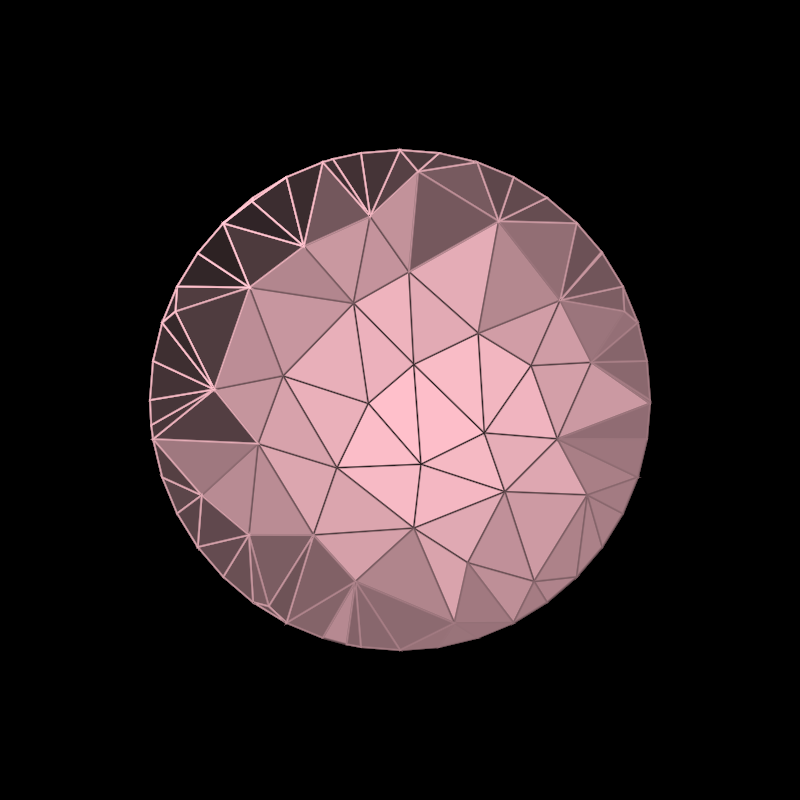
DemoDelaunay02
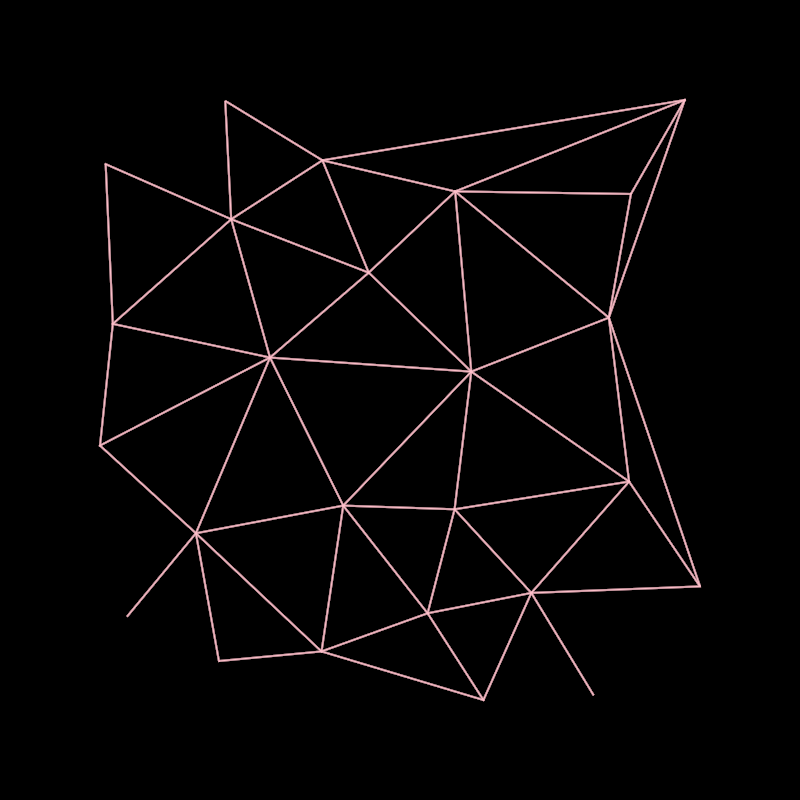
DemoVoronoi01