orx-shade-styles
Shader based fills and strokes, including various types of gradient fills.
Demos
clip/DemoClip01
Animated demonstration on how to use the clip shade style to mask-out
part of an image (or anything else drawn while the shade style is active).
The clipping uses the CONTAIN fit mode.
This example uses a rotating star-shaped clipping with 24 sides.
Other available clipping shapes are circle, rectangle, line and ellipse.
Press a mouse button to toggle the feather property between 0.0 and 0.5.
clip/DemoClip02
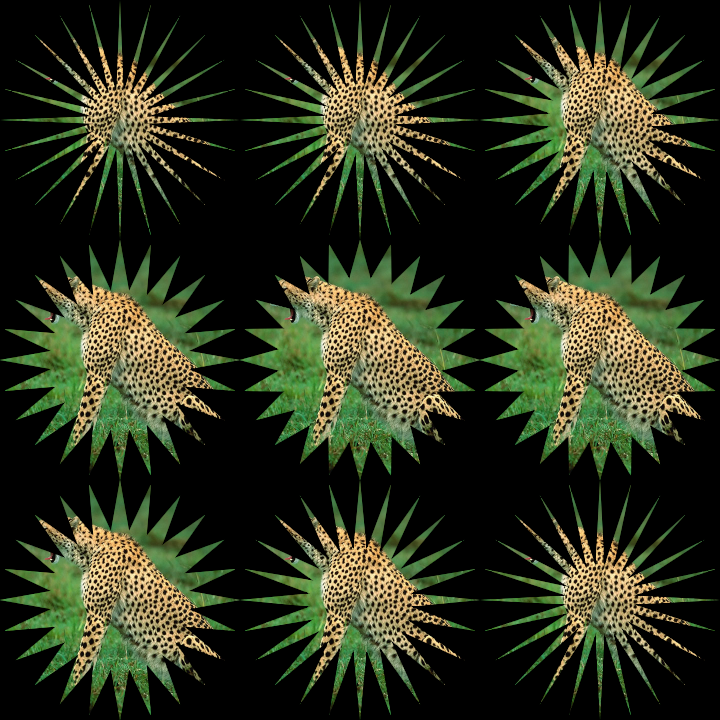
Animated demonstration on how to use the clip shade style to mask-out
part of an image (or anything else drawn while the shade style is active).
The clipping uses different fit modes on each row, and different aspect
ratios in each column.
This example uses a rotating star-shaped clipping with 24 sides.
Other available clipping shapes are circle, rectangle, line and ellipse.
Press a mouse button to toggle the feather property between 0.0 and 0.5.
clip/DemoClip03
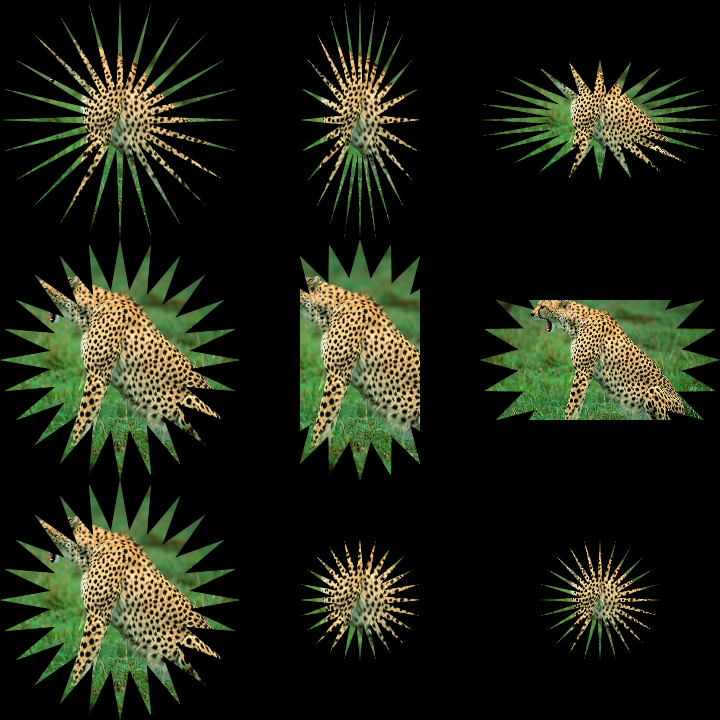
Animated demonstration on how to use the clip shade style to mask-out
part of an image (or anything else drawn while the shade style is active).
The clipping uses different fit modes on each row, and different aspect
ratios in each column.
This example uses a rotating ellipse-shaped clipping.
Other available clipping shapes are circle, rectangle, line and star.
Press a mouse button to toggle the feather property between 0.0 and 0.5.
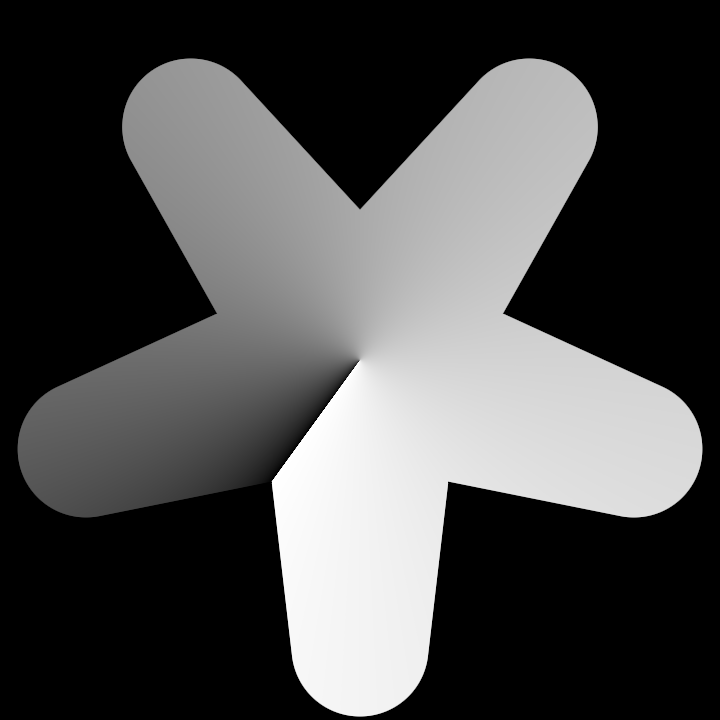
composed/DemoComposed01
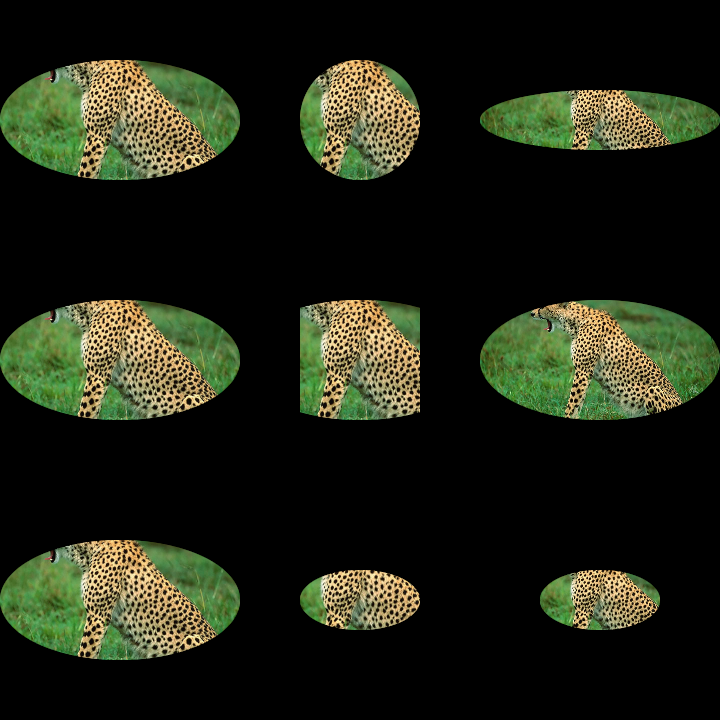
Demonstrates how to combine two shade styles
(a conic gradient and a rounded star clipping)
by using the + operator.
The design is animated by applying a rotation transformation matrix
based in the seconds variable.
gradients/DemoGradient01
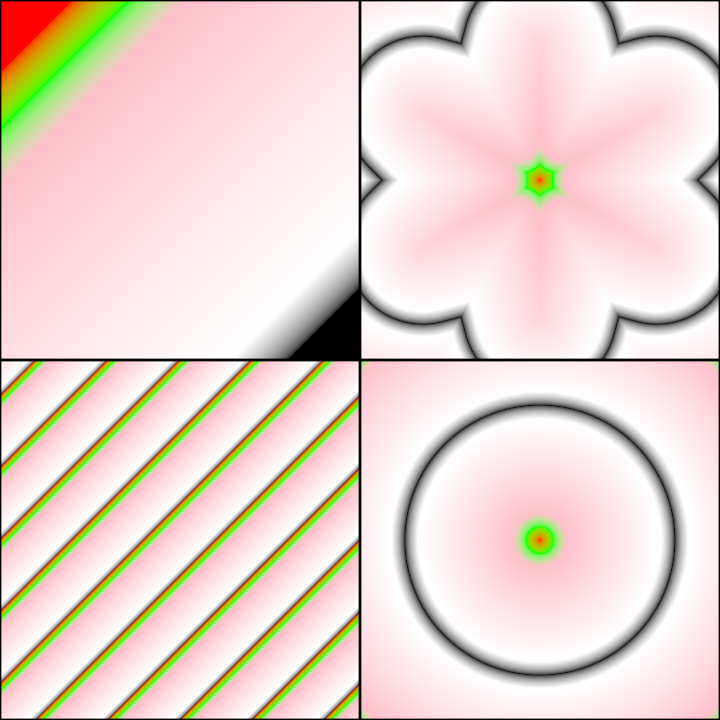
Demonstrates how to create 4 animated gradient shade-styles with 5 colors:
- a linear gradient
- a stellar gradient
- a radial gradient
- a linear gradient with
SpreadMethod.REPEATEach gradient style has different adjustable attributes.
gradients/DemoGradient02
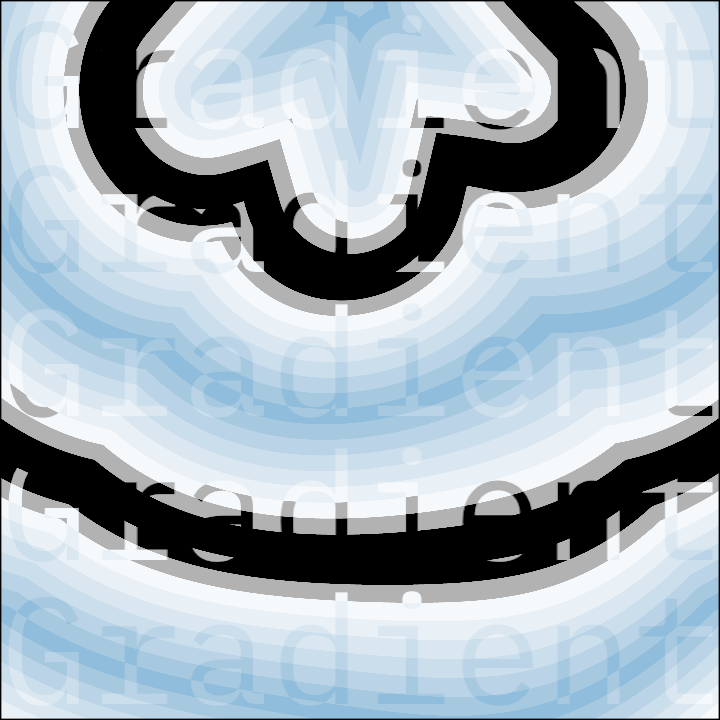
An application with two animated layers of slightly different stellar shade styles.
The bottom layer features a rectangle, while the top layer includes a large text repeated 5 times.
The only different between the two shade styles is a minor change in the levelWarp
function, which is used to alter the gradient's level (its normalized t value)
based on the current coordinates being processed, and the original level at this location.
Without this difference, the shader would look identical, and the text would be invisible.
gradients/DemoGradient03
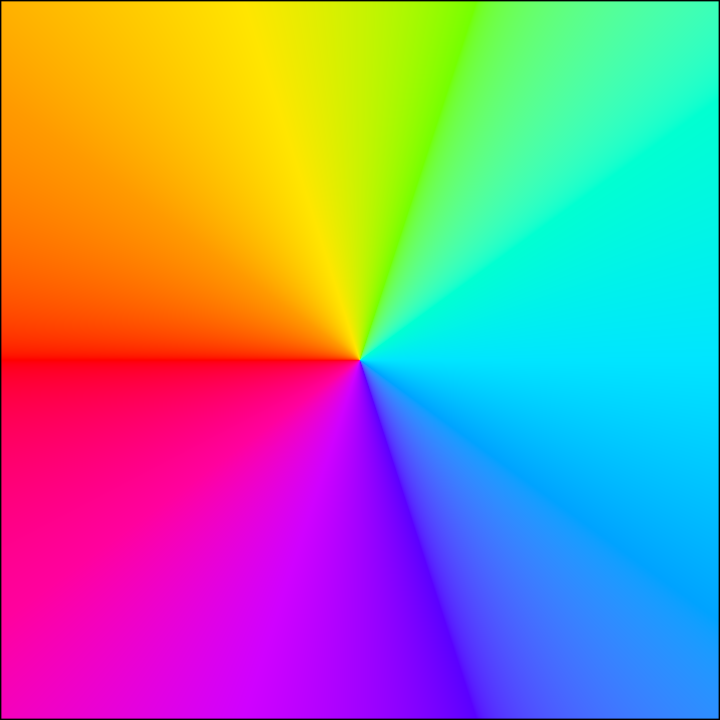
Demonstrates how to create a rainbow-like rotating conic gradient in OKHSV color space.
The gradient consists of ten evenly spaced colors, achieved by shifting the hue of a base color.
Since the conic gradient covers 360 degrees, changing the spreadMethod does not affect the result.
gradients/DemoGradient04
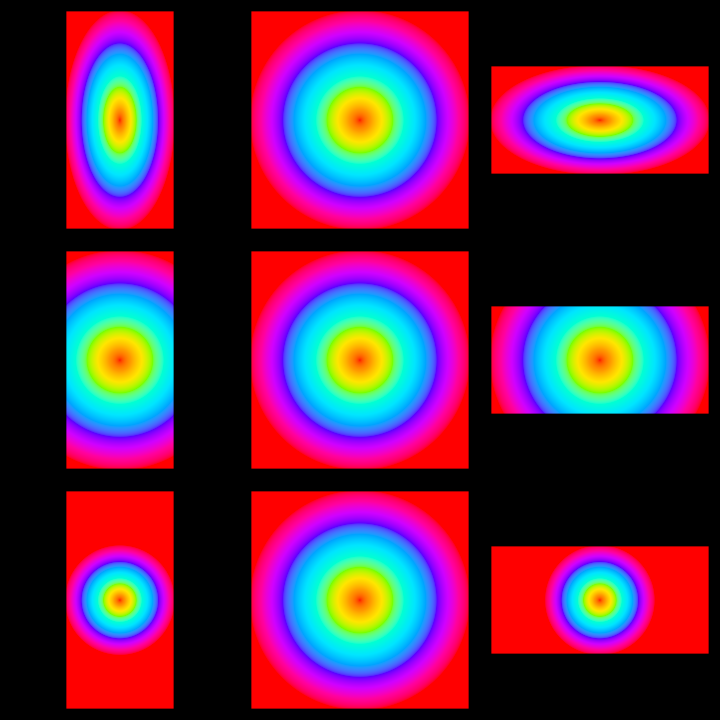
Creates a 3x3 grid of gradients demonstrating how the same gradient can look different depending on the aspect ratio of the target shape and the fit method used.
The first column features a vertical rectangle. The second one, a square, and the third one a horizontal rectangle.
The rows feature the different fit methods: FillFit.STRETCH, FillFit.COVER and FillFit.CONTAIN.
gradients/DemoGradient05
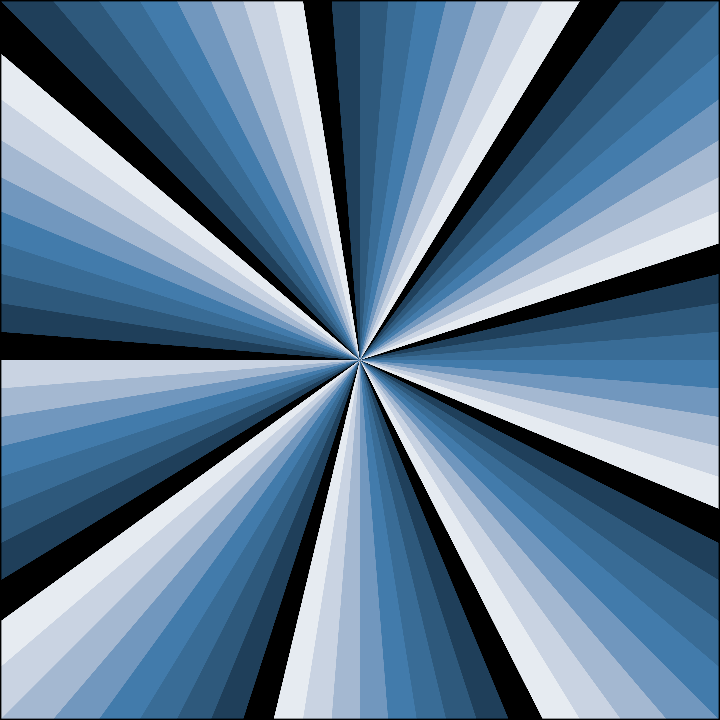
Reveals the effect of using quantization on a conic gradient.
By using a quantization of 10 we get 9 color bands.
Notice how the center of the conic gradient is specified in
screen coordinates. To make this possible, we need to set the
fillUnits to FillUnits.WORLD. By default, the center of
the gradient coordinates is Vector2(0.5, 0.5).
gradients/DemoGradient06
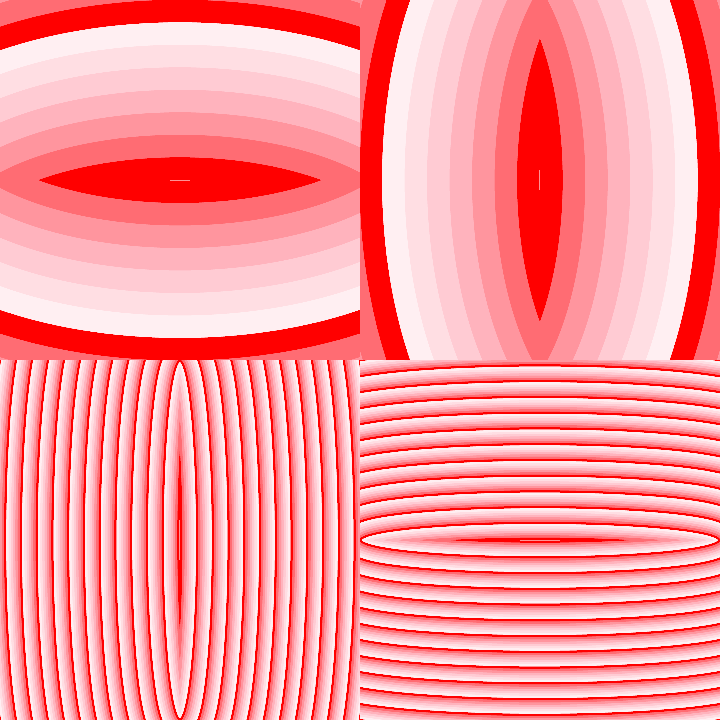
Demonstrates how to animate the radiusX and radiusY elliptic gradient arguments separately.
They are animated in a circular fashion, making the ellipse transition between a thin vertical shape,
a round shape, and a thin horizontal shape.
The SpreadMethod.REPEAT setting makes the gradient cover the available space repeating the gradient
as many times as needed.
gradients/DemoGradient07
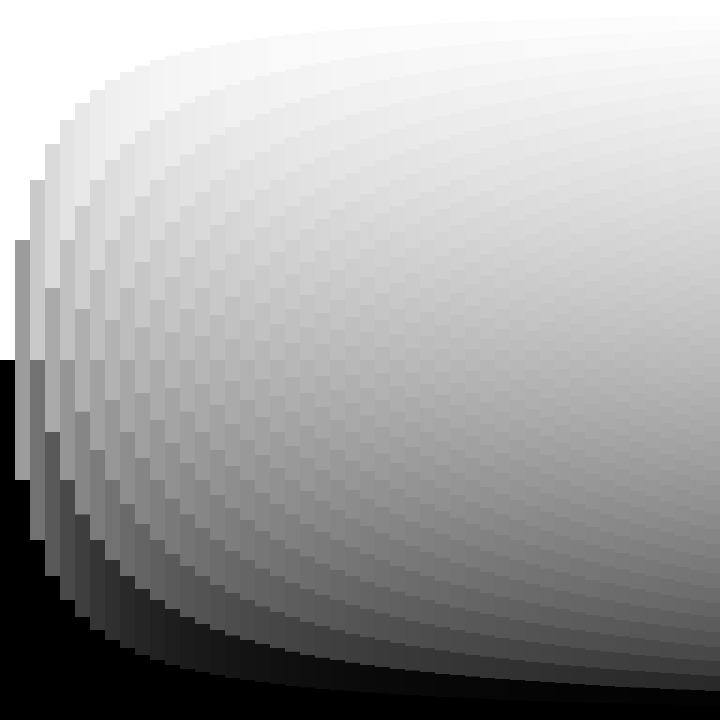
A design with 48 vertical bands with gradients. Each one has a unique quantization
value based on the index of the band. All bands have 2 color stops:
WHITE at the top (position 0.0), and BLACK near the bottom (near position 1.0),
with the exact value depending on the quantization value.
Demonstrates how to produce a quantized gradient with a specific number of equal color bands.
gradients/DemoGradient08
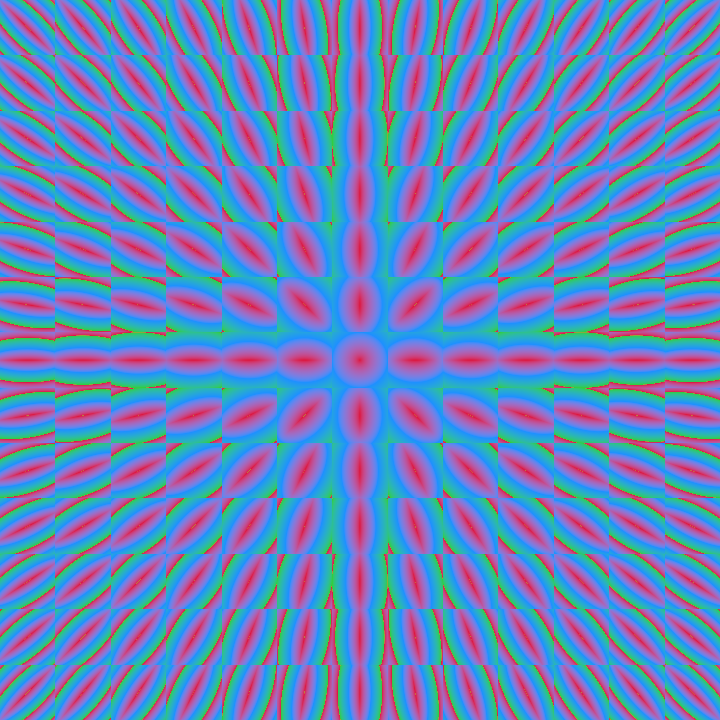
Demonstrates the creation of a grid-based design with 13x13 cells, each with an elliptic gradient
pointing towards the center of the window. The center cell features a circular gradient (by having
radiusX equal to radiusY). The farther a cell is from the center, the higher the aspect ratio
of the ellipse is, becoming closer to a line than to a circle near the corners.
gradients/DemoGradient09
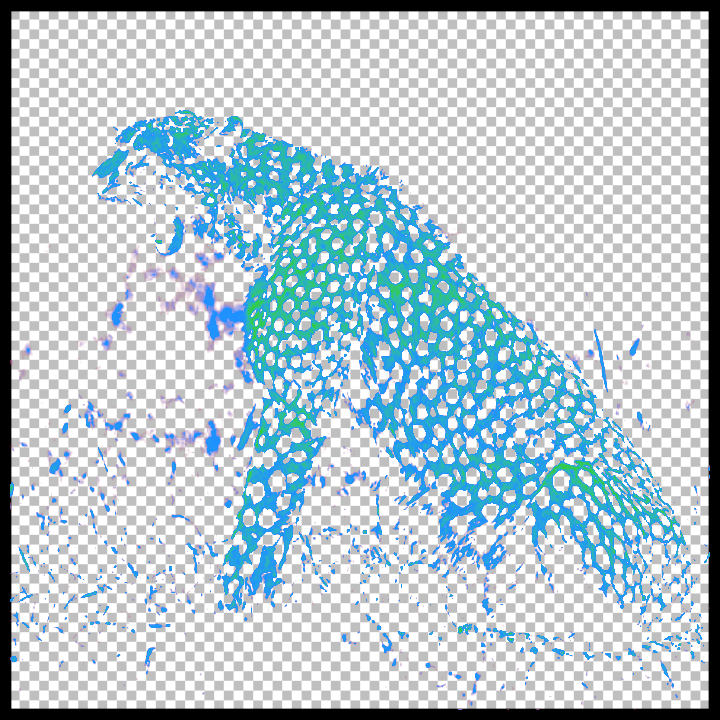
Demonstrates two types of shade styles: pattern and luma.
The pattern shade style is used to generate a checkers-pattern.
This example also loads and draws an image using the luma shade style
to map pixel brightnesses to gradient colors. Dark colors are
mapped to transparent, revealing the checkers-pattern behind it
in parts of the image.
image/DemoImageFill01
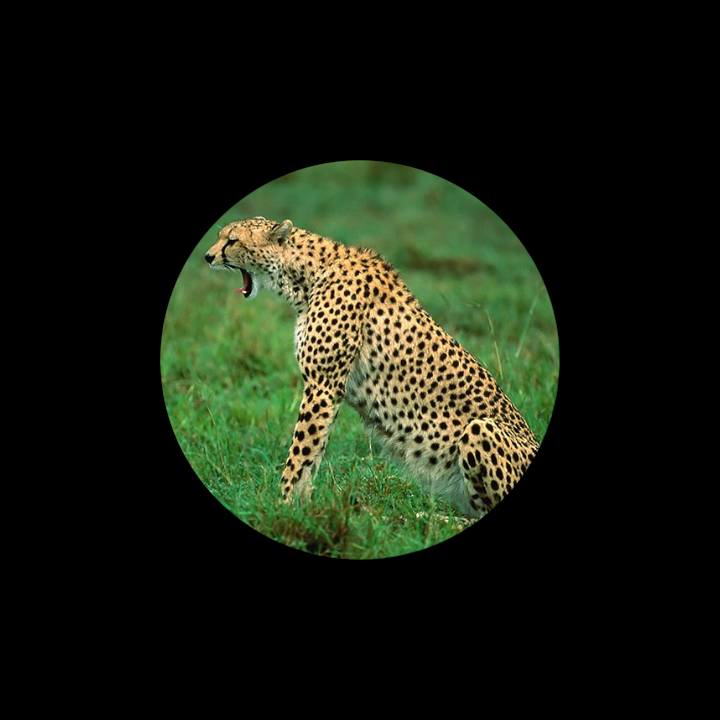
A minimal demonstration of the imageFill shade style, used to texture
shapes using a loaded image (or generated color buffer).
image/DemoImageFill02
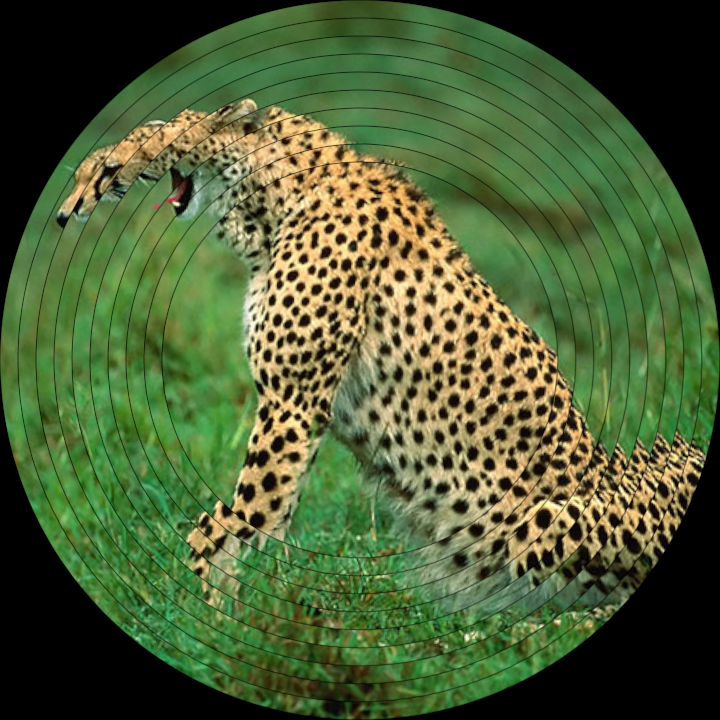
Demonstrates the use of the imageFill shade style, applied to 10 concentric
circles. The rotation of each circle depends on the cosine of time, with
a varying time offset applied per circle, for a fun wavy effect.
image/DemoImageFill03
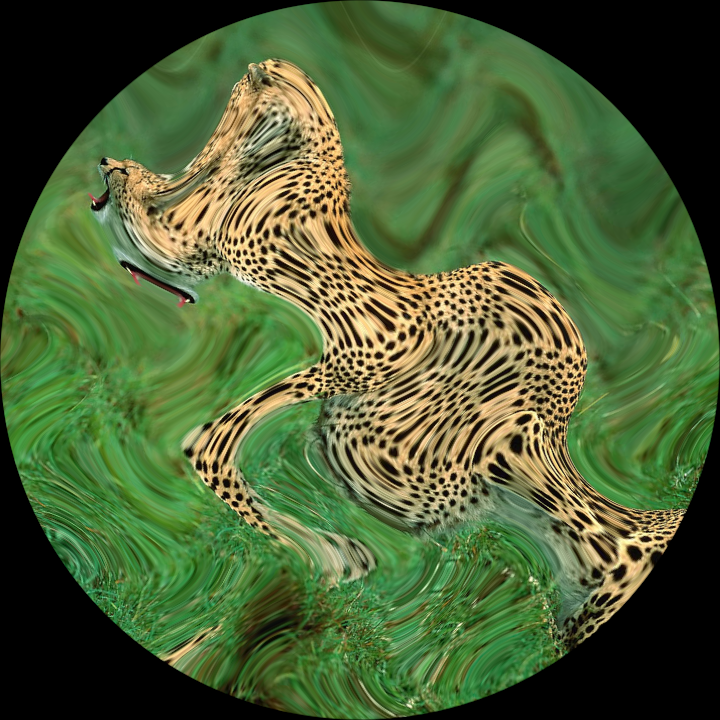
Demonstrates the use of the domainWarpFunction in an imageFill shade style, used to deform
the coordinate system of the shader. A time parameter is passed to the shader and used
to alter the deformation in real time.
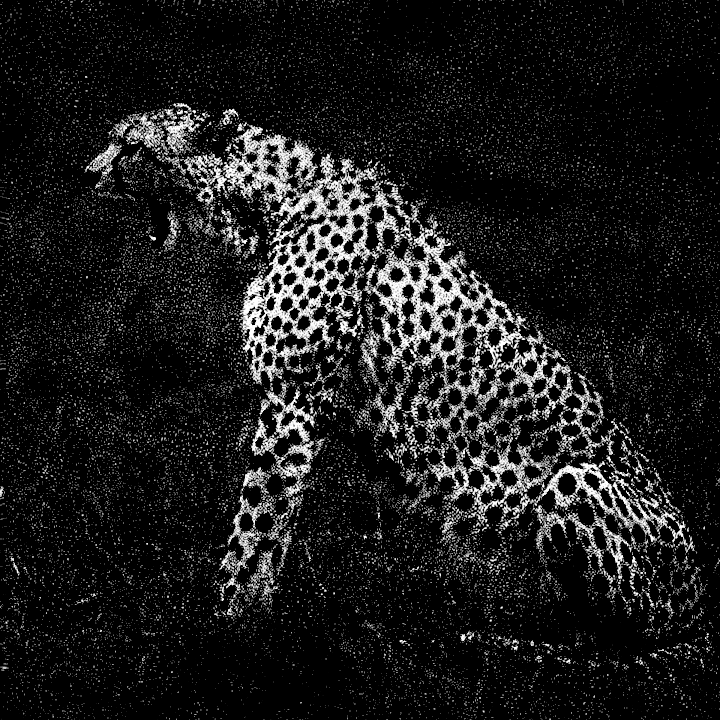
noise/DemoBlueNoise01
Demonstrates the use of the blueNois variant of the noise shade style
to render an image as black and white with a pointillist luma-based effect.
More computationally heavy than other shade styles.
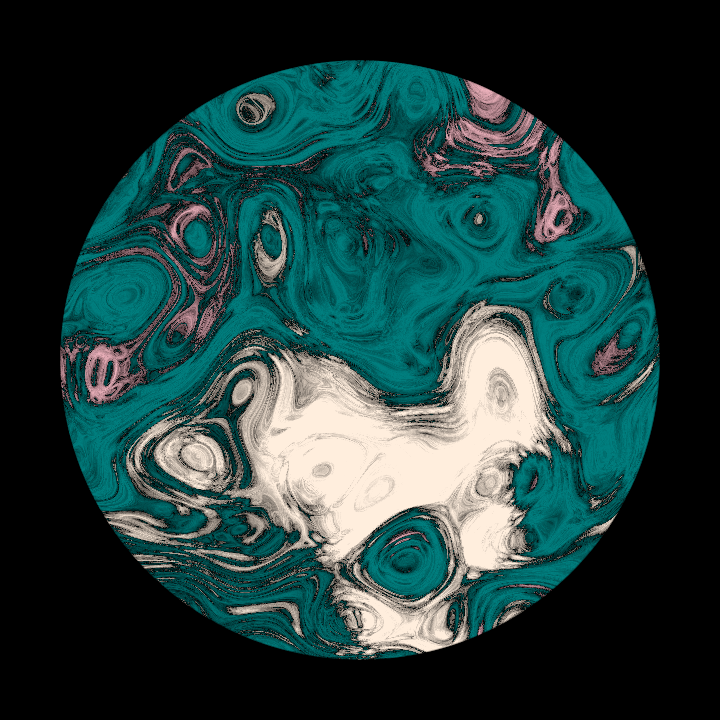
noise/DemoSimplex01
Demonstrates the use of the simplex variant of the noise shade style.
It generates a gray-scale pattern, which is then colorized by using a luma
gradient shade style.
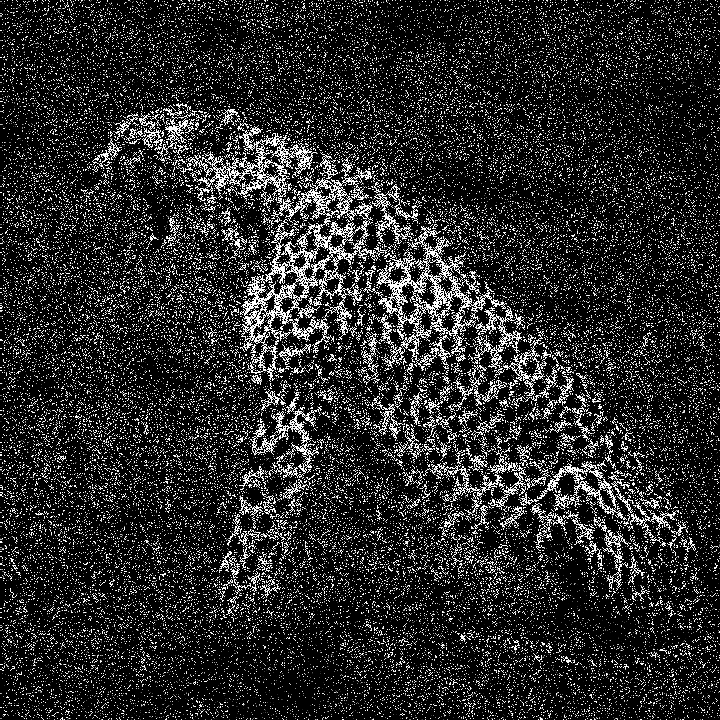
noise/DemoWhiteNoise01
Demonstrates how to render a color image as black and white
using the whiteNoise variant of the noise shade style.
A custom blendFunction is used to control how pixel colors are
transformed.
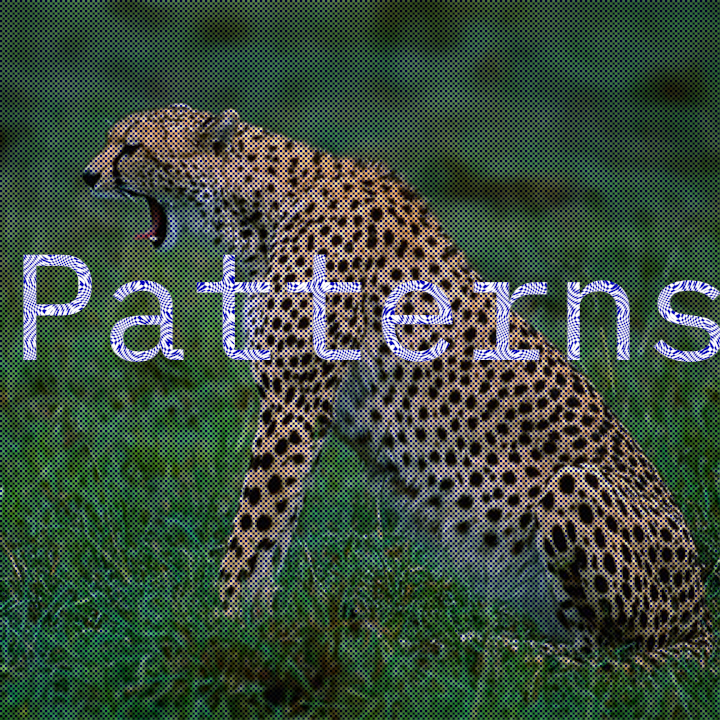
patterns/DemoPatterns01
Demonstrates the use of the checkers variant of the pattern shade style.
The style is used twice with different parameters: once for a background image and then for a text displayed on top of it.
The text shade style features a domainWarpFunction, which is used to deform
the coordinate system of the shade style.
Try reducing the scale parameter to make the checkers more obvious.
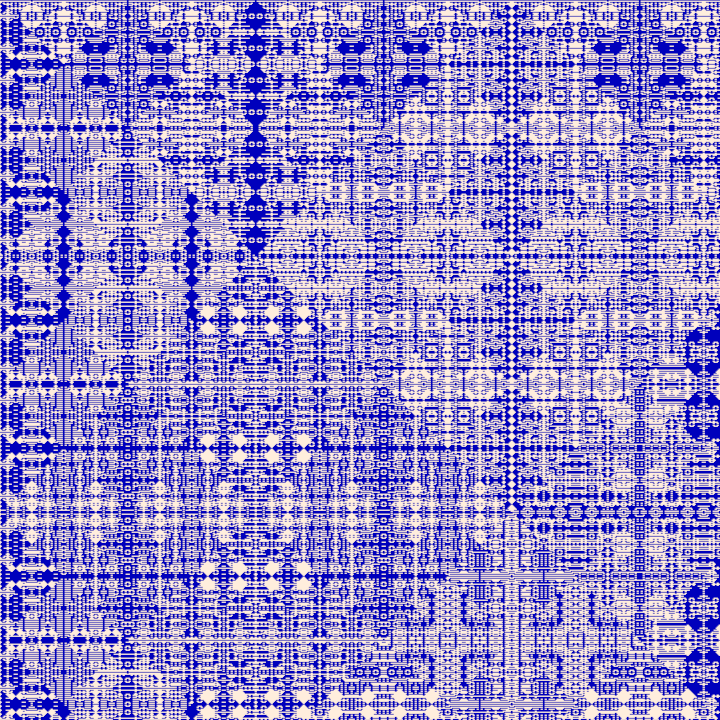
patterns/DemoPatterns02
Demonstrates the use of the xorMod2 variant of the pattern shade style;
an algorithmic and intricate pattern.
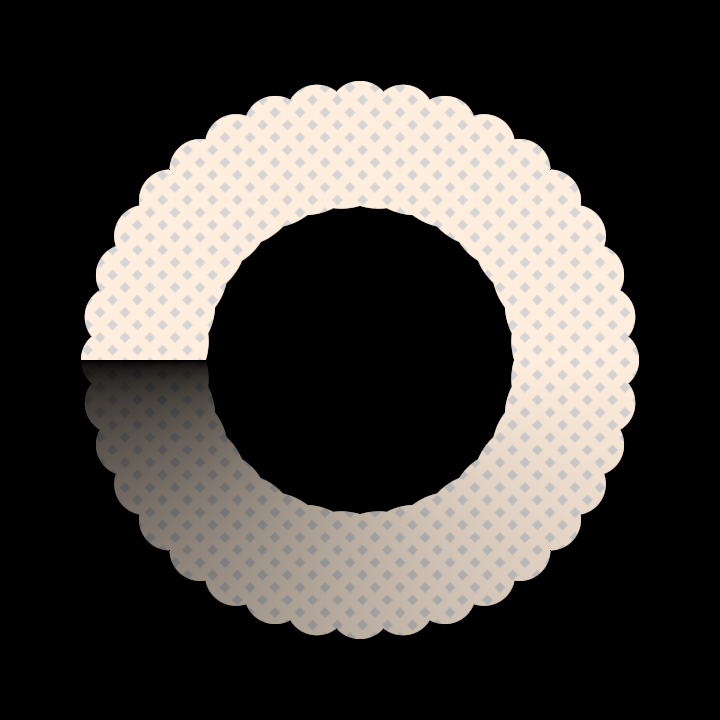
patterns/DemoPatterns03
Demonstrates the use of a complex shade style made by combining an
animated pattern, a gradient and a clip.
spatial/DemoHemisphere01
Demonstrates the [HemisphereLight] shade style, a simple shader that can be used for simple illumination of 3D meshes.
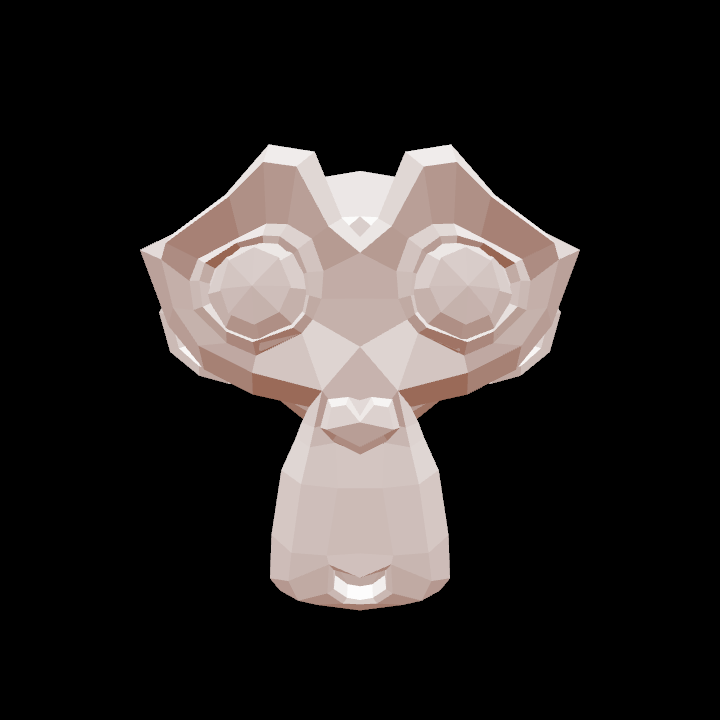
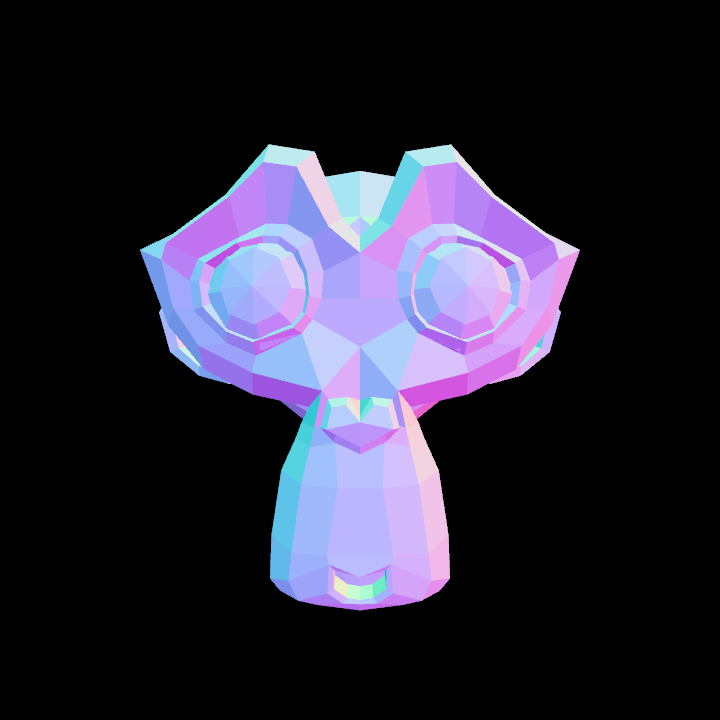
spatial/DemoVisualizeNormals01
Demonstrates the use of the [visualizeNormals] shade style, which can help debug the normals of a 3D mesh.