
101 lines
2.3 KiB
Markdown
101 lines
2.3 KiB
Markdown
# orx-expression-evaluator
|
|
|
|
Tools to evaluate strings containing mathematical expressions.
|
|
|
|
# Expression evaluator
|
|
|
|
```kotlin
|
|
val expression = "x + y"
|
|
val constants = mapOf("x" to 1.0, "y" to 2.0)
|
|
evaluateExpression(expression, constants)
|
|
```
|
|
## Built-in expression functions
|
|
|
|
Unary functions:
|
|
* `abs(x)`
|
|
* `acos(x)`
|
|
* `asin(x)`
|
|
* `atan(x)`
|
|
* `ceil(x)`
|
|
* `cos(x)`
|
|
* `degrees(x)`
|
|
* `exps(x)`
|
|
* `floor(x)`
|
|
* `radians(x)`
|
|
* `round(x)`
|
|
* `saturate(x)`, clamp x to [0.0, 1.0]
|
|
* `sqrt(x)`
|
|
* `tan(x)`
|
|
|
|
Binary functions:
|
|
* `atan2(x, y)`
|
|
* `length(x, y)`, the Euclidean length of the vector (x,y)
|
|
* `max(x, y)`,
|
|
* `min(x, y)`,
|
|
* `pow(x, n)`
|
|
* `random(x, y)`, return a random number in [x, y)
|
|
|
|
Ternary functions:
|
|
* `length(x, y, z)`, the Euclidean length of the vector (x, y, z)
|
|
* `max(x, y, z)`
|
|
* `min(x, y, z)`
|
|
* `mix(l, r, f)`
|
|
* `smoothstep(e0, e1, x)`
|
|
* `sum(x, y, z)`
|
|
|
|
Quaternary functions:
|
|
* `length(x, y, z, w)`, the Euclidean length of the vector (x, y, z)
|
|
* `max(a, b, c, d)`
|
|
* `min(a, b, c, d)`
|
|
* `sum(a, b, c, d)`
|
|
|
|
Quinary functions:
|
|
* `map(x0, x1, y0, y1, v)`
|
|
* `max(a, b, c, d, e)`
|
|
* `min(a, b, c, d, e)`
|
|
* `sum(a, b, c, d, e)`
|
|
|
|
# Compiled functions
|
|
|
|
```kotlin
|
|
val expression = "x * 5.0 + cos(x)"
|
|
val f = compileFunction1(expression, "x")
|
|
f(0.0)
|
|
```
|
|
|
|
```kotlin
|
|
val expression = "x * 5.0 + cos(x) * y"
|
|
val f = compileFunction2(expression, "x", "y")
|
|
f(0.0, 0.4)
|
|
```
|
|
|
|
# Property delegates
|
|
|
|
```kotlin
|
|
val constants = mutableMapOf("width" to 300.0)
|
|
val settings = object {
|
|
var xExpression = "cos(t) * 50.0 + width / 2.0"
|
|
}
|
|
val xFunction by watchingExpression1(settings::xExpression, "t", constants)
|
|
|
|
xFunction(1.0)
|
|
```
|
|
<!-- __demos__ -->
|
|
## Demos
|
|
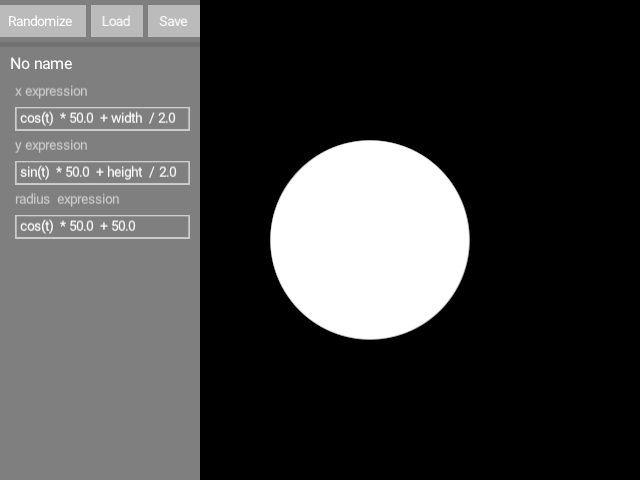
### DemoExpressionEvaluator01
|
|
|
|
|
|
|
|
|
|
|
|
[source code](src/jvmDemo/kotlin/DemoExpressionEvaluator01.kt)
|
|
|
|
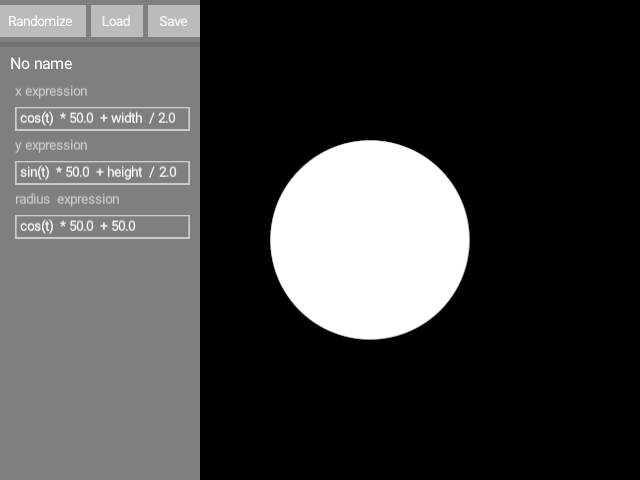
### DemoExpressionEvaluator02
|
|
|
|
Improved version of DemoExpressionEvaluator01, it uses [watchingExpression1] to automatically convert an expression
|
|
string into a function with a parameter "t".
|
|
|
|
|
|
|
|
[source code](src/jvmDemo/kotlin/DemoExpressionEvaluator02.kt)
|