
103 lines
3.4 KiB
Markdown
103 lines
3.4 KiB
Markdown
# orx-fcurve
|
|
|
|
FCurves are 1 dimensional function curves constructed from 2D bezier functions.
|
|
|
|
The language to express Fcurves is similar to SVG's path language.
|
|
|
|
`x` values usually represent duration in seconds.
|
|
|
|
| Relative command | Absolute command | Description |
|
|
|---------------------|-----------------------|-------------------------------------------------------------|
|
|
| `m y` | `M y` | move the pen only in the y-direction |
|
|
| `h x` | `H x` | hold a value to draw a horizontal line |
|
|
| `l x,y` | `L x,y` | line to (x, y) |
|
|
| `q x0,y0,x,y` | `Q x0,y0,x,y` | quadratic bezier to (x,y) and control-point (x0, y0) |
|
|
| `c x0,y0,x1,y1,x,y` | `C x0,y0,x1,y1,x,y` | cubic bezier to (x,y) and control-points (x0, y0), (x1, y1) |
|
|
| `t x,y` | `T x,y` | quadratic smooth to (x, y) |
|
|
| `s x1,y1,x,y` | `S x1,y1,x,y` | cubic smooth to (x,y) and control point (x1, y1) |
|
|
|
|
## Example Fcurves
|
|
|
|
`M0 l5,10 q4,-10` or `M0 l5 10 q4 -10`
|
|
|
|
`M0 h10 c3,10,5,-10,8,0.5 L5,5`
|
|
|
|
New lines and commas are optional. They can help with readability.
|
|
```
|
|
M0 h10
|
|
c3,10,5,-10,8,0.5
|
|
L5,5
|
|
```
|
|
|
|
# EFCurves
|
|
|
|
EFCurves are Fcurves with an additional preprocessing step in which scalar expressions are evaluated.
|
|
|
|
## Comments
|
|
|
|
EFCurves add support for comments using the `#` character.
|
|
|
|
`M0 h10 c3,10,5,-10,8,0.5 # L5,5`
|
|
|
|
|
|
```
|
|
M0 h10 # setup the initial y value and hold it for 10 units.
|
|
c3,10,5,-10,8,0.5 # relative cubic bezier curve
|
|
# and a final line-to
|
|
L5,5
|
|
```
|
|
|
|
## Expressions
|
|
|
|
For example: `M0 L_3 * 4_,4` evaluates to `M0 L12,4`.
|
|
|
|
`orx-expression-evaluator` is used to evaluate the expressions, please refer to its
|
|
documentation for details on the expression language used.
|
|
|
|
## Repetitions
|
|
|
|
EFCurves add support for repetitions. Repetitions are expanded by replacing
|
|
occurrences of `|<text-to-repeat>|[<number-of-repetitions>]` with `number-of-repetitions` copies
|
|
of `text-to-repeat`.
|
|
|
|
For example:
|
|
* `M0 |h1 m1|[3]` expands to `M0 h1 m1 h1 m1 h1 m1`
|
|
* `M0 |h1 m1|[0]` expands to `M0`
|
|
|
|
### Nested repetitions
|
|
|
|
Repetitions can be nested.
|
|
|
|
For example `|M0 |h1 m1|[3]|[2]` expands to `M0 h1 m1 h1 m1 h1 m1 M0 h1 m1 h1 m1 h1 m1`.
|
|
|
|
### Interaction between repetitions and expressions
|
|
|
|
`M0 |H_it + 1_ m1][3]` expands to `M0 H1 m1 H2 m1 H3 m1`
|
|
|
|
|
|
|
|
`M0 |H_index + 1_ m_it_]{1.2, 1.3, 1.4}` expands to `M0 H1 m1.2 H2 m1.3 H3 m1.4`
|
|
|
|
|
|
|
|
# References
|
|
* https://x.com/ruby0x1/status/1258252352672247814
|
|
* https://blender.stackexchange.com/questions/52403/what-is-the-mathematical-basis-for-f-curves/52468#52468
|
|
* https://pomax.github.io/bezierinfo/#yforx
|
|
<!-- __demos__ -->
|
|
## Demos
|
|
### DemoFCurve01
|
|
[source code](src/jvmDemo/kotlin/DemoFCurve01.kt)
|
|
|
|
|
|
|
|
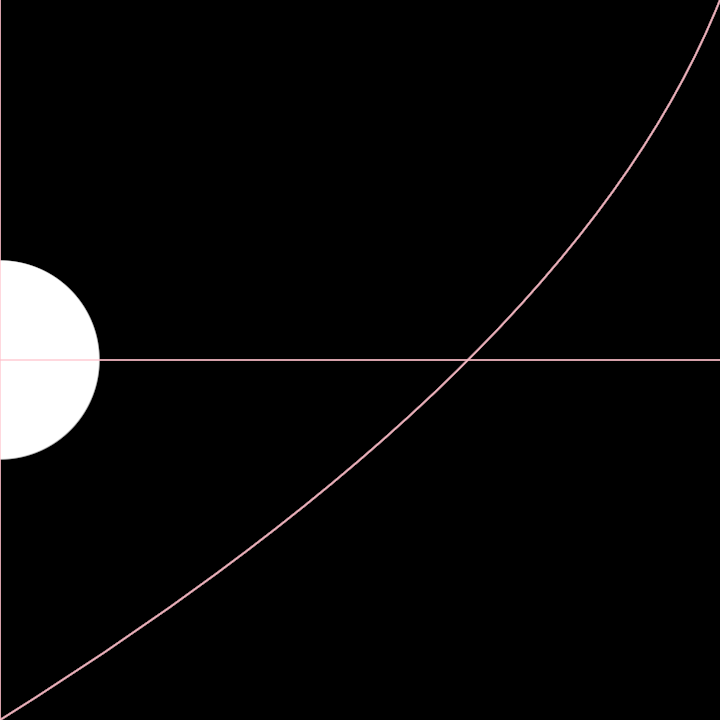
### DemoFCurve02
|
|
[source code](src/jvmDemo/kotlin/DemoFCurve02.kt)
|
|
|
|
|
|
|
|
### DemoMultiFCurve01
|
|
[source code](src/jvmDemo/kotlin/DemoMultiFCurve01.kt)
|
|
|
|
|