
128 lines
3.9 KiB
Markdown
128 lines
3.9 KiB
Markdown
# orx-triangulation
|
|
|
|
**Delaunay** triangulation and **Voronoi** diagrams.
|
|
|
|
The functionality comes from a Javascript port of the following libraries:
|
|
|
|
* [delaunator](https://github.com/ricardomatias/delaunator) (external)
|
|
* [d3-delaunay](https://github.com/d3/d3-delaunay) (the port is included in this package)
|
|
|
|
## Usage
|
|
|
|
### DelaunayTriangulation
|
|
|
|
The entry point is the `DelaunayTriangulation` class.
|
|
|
|
```kotlin
|
|
val points: List<Vector2>
|
|
val delaunay = DelaunayTriangulation(points)
|
|
|
|
// or
|
|
|
|
val delaunay = points.delaunayTriangulation()
|
|
```
|
|
|
|
This is how you retrieve the triangulation results:
|
|
|
|
```kotlin
|
|
val triangles: List<Triangle> = delaunay.triangles()
|
|
val halfedges: List<ShapeContour> = delaunay.halfedges()
|
|
val hull: ShapeContour = delaunay.hull()
|
|
|
|
```
|
|
|
|
### Voronoi
|
|
|
|
The bounds specify where the Voronoi diagram will be clipped.
|
|
|
|
```kotlin
|
|
val bounds: Rectangle
|
|
|
|
val delaunay = points.delaunayTriangulation()
|
|
val voronoi = delaunay.voronoiDiagram(bounds)
|
|
// or
|
|
val voronoi = points.voronoiDiagram(bounds)
|
|
```
|
|
|
|
See [To Infinity and Back Again](https://observablehq.com/@mbostock/to-infinity-and-back-again) for an interactive explanation of Voronoi cell clipping.
|
|
|
|
This is how you retrieve th results:
|
|
|
|
```kotlin
|
|
val cells: List<ShapeContour> = voronoi.cellPolygons()
|
|
val cell: ShapeContour = voronoi.cellPolygon(int) // index
|
|
val circumcenters: List<Vector2> = voronoi.circumcenters
|
|
|
|
// Returns true if the cell with the specified index i contains the specified vector
|
|
val containsVector = voronoi.contains(int, Vector2)
|
|
```
|
|
|
|
|
|
### Authors
|
|
|
|
Ricardo Matias / [@ricardomatias](https://github.com/ricardomatias)
|
|
Edwin Jakobs / [@edwinRNDR](https://github.com/edwinRNDR)
|
|
<!-- __demos__ -->
|
|
## Demos
|
|
### DemoDelaunay01
|
|
|
|
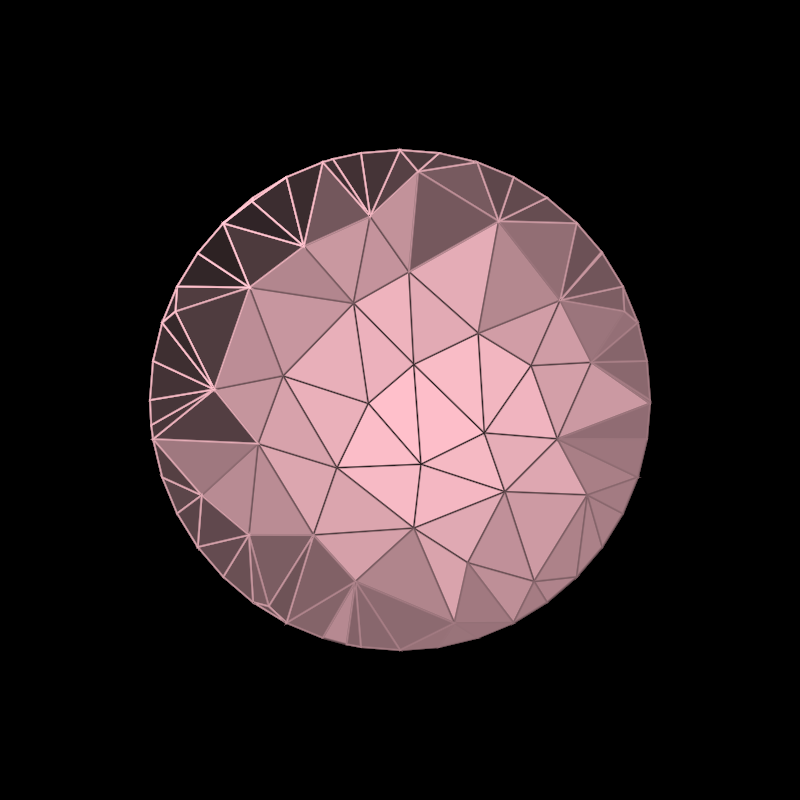
This method sets up a graphical application using the OPENRNDR framework
|
|
to visually demonstrate Delaunay triangulation on a set of points scattered
|
|
along a circle with Poisson disk sampling.
|
|
|
|
The application features the following:
|
|
- A central circle with a defined radius.
|
|
- Points generated within the circle using a scatter algorithm that
|
|
maintains specific spacing and avoids clustering.
|
|
- Delaunay triangulation computed from the combined point set.
|
|
- Rendering of triangles that are part of the Delaunay triangulation.
|
|
- Visual styling with dynamic color shading for better clarity of layers
|
|
and triangle order.
|
|
|
|
This method demonstrates concepts of computational geometry and procedural
|
|
rendering.
|
|
|
|
|
|
|
|
[source code](src/jvmDemo/kotlin/DemoDelaunay01.kt)
|
|
|
|
### DemoDelaunay02
|
|
|
|
|
|
|
|
|
|
|
|
[source code](src/jvmDemo/kotlin/DemoDelaunay02.kt)
|
|
|
|
### DemoVoronoi01
|
|
|
|
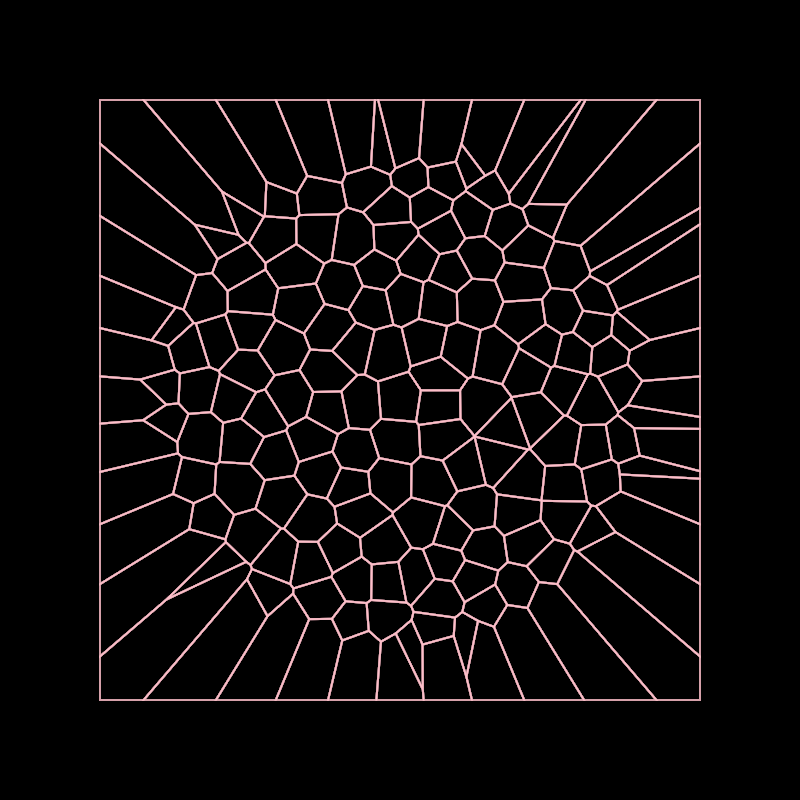
This program generates a Voronoi diagram within a defined circular area and visualizes it.
|
|
|
|
The program performs the following:
|
|
- Defines a circular area and a rectangular bounding frame within the canvas.
|
|
- Uses Poisson Disk Sampling to generate points within the circular area.
|
|
- Computes the Delaunay triangulation for the generated points, including equidistant points on the circle boundary.
|
|
- Derives the Voronoi diagram using the Delaunay triangulation and the bounding frame.
|
|
- Extracts the cell polygons of the Voronoi diagram.
|
|
- Renders the Voronoi cell polygons on the canvas, with a pink stroke on a black background.
|
|
|
|
|
|
|
|
[source code](src/jvmDemo/kotlin/DemoVoronoi01.kt)
|
|
|
|
### DemoVoronoi02
|
|
|
|
|
|
|
|
|
|
|
|
[source code](src/jvmDemo/kotlin/DemoVoronoi02.kt)
|
|
|
|
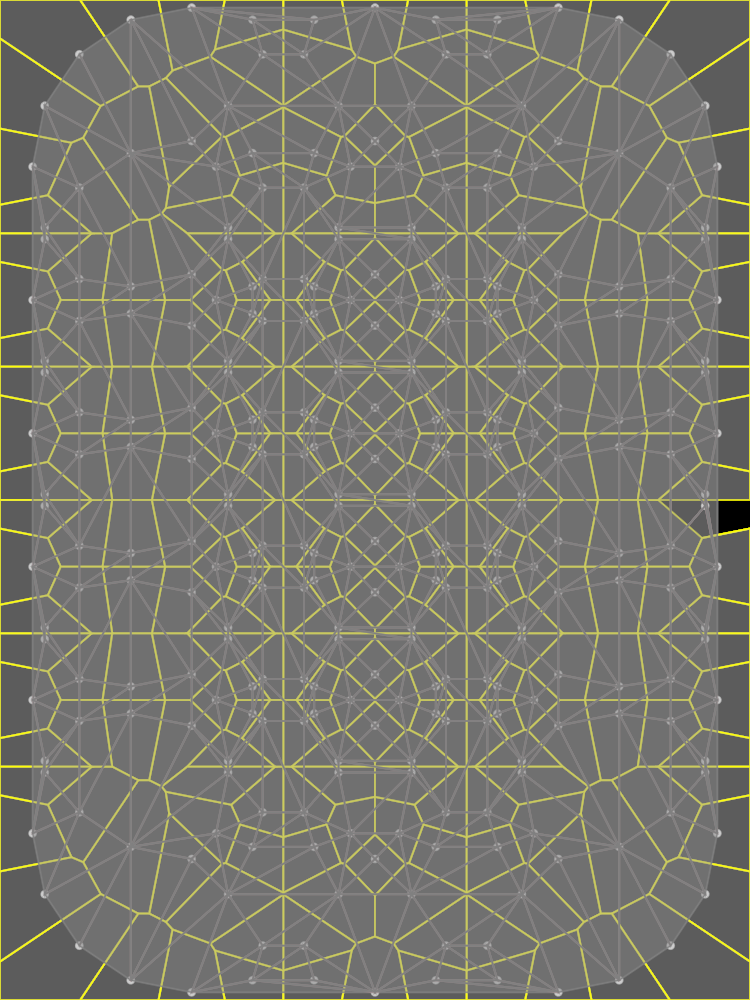
### DemoVoronoi03
|
|
|
|
|
|
|
|
|
|
|
|
[source code](src/jvmDemo/kotlin/DemoVoronoi03.kt)
|